The cash reconciliation process compares what your accounting records say you have in cash against what your bank statements, payment processors, and petty cash counts actually show. Run through it consistently and discrepancies get caught in days, not discovered months later during an audit.
Knowing how to do cash reconciliation comes down to running the same set of checks every cycle, on a fixed schedule rather than as a reaction to something looking off. This guide walks through how to reconcile cash across every source you handle, from bank accounts to petty cash to processor payouts, in six steps you can repeat on a schedule.
What the cash reconciliation process actually compares
The process crosses three layers: the accounting records or internal records your team maintains in the accounting system, the general ledger where those movements get consolidated, and the external evidence, bank statement, payment processors, cash on hand, that confirms whether what was recorded actually happened.
Why the cash reconciliation process matters for cash flow and financial integrity
Without this process, cash flow management rests on figures nobody verified against the source. That distorts financial reporting and financial statements, weakens the financial integrity and financial accuracy that treasury operations depend on, and leaves the balance sheet showing a cash position that may not actually exist.
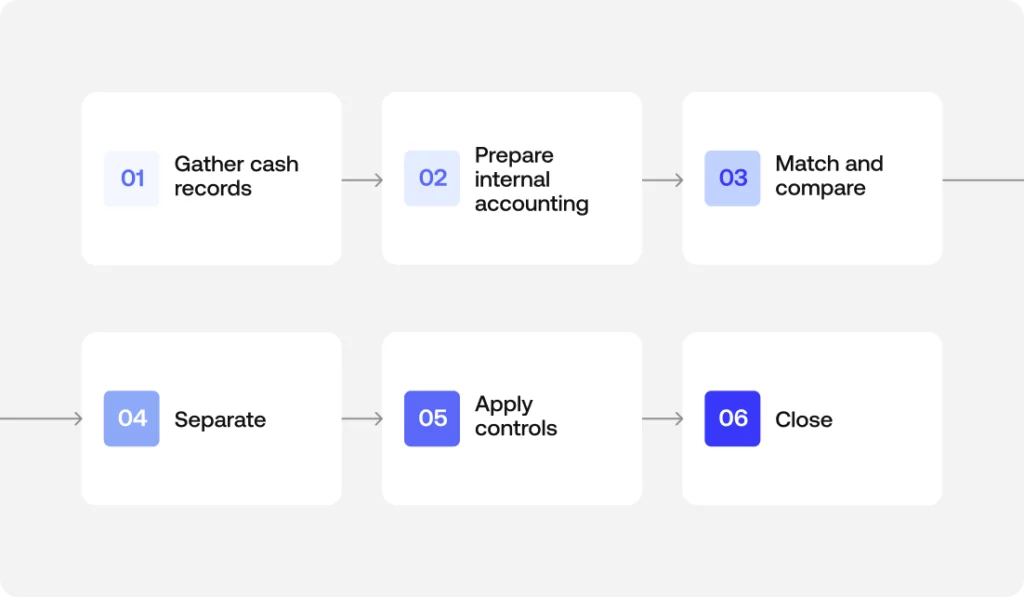
The cash reconciliation process in 6 steps
Step 1: Gather cash records from every source
Pull the bank statement from every account, the reports from payment processors, the cash on hand count if you handle petty cash or cash registers, and the detail of customer payments and withdrawals for the period.
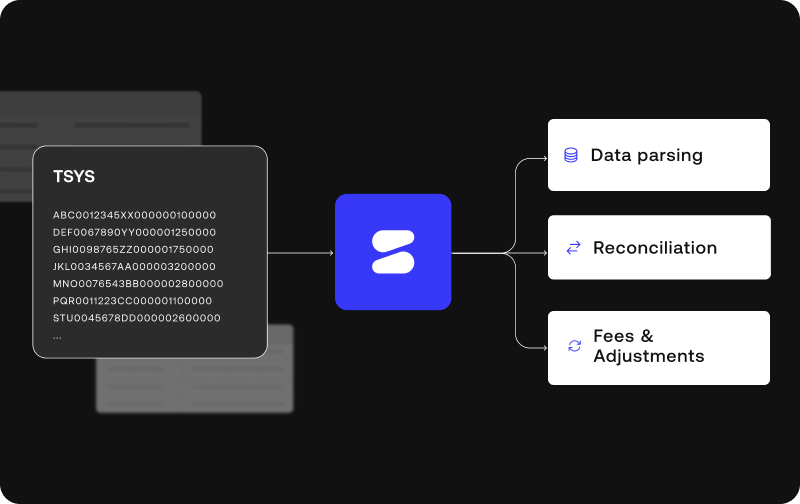
Simetrik can ingest financial and operational data from banks, processors, and other compatible sources, preparing it for a reconciliation workflow.
Step 2: Prepare your internal accounting records
Before comparing anything, your accounting records or internal records, what the accounting system says happened, need to be complete: all cash inflows and withdrawals from the period, with nothing left unrecorded.
Step 3: Match transactions and compare balances
This is where transaction matching happens: crossing each movement against its counterpart to compare balances, checking the calculated ending balance against the bank balance and the cash balances reported by each source.
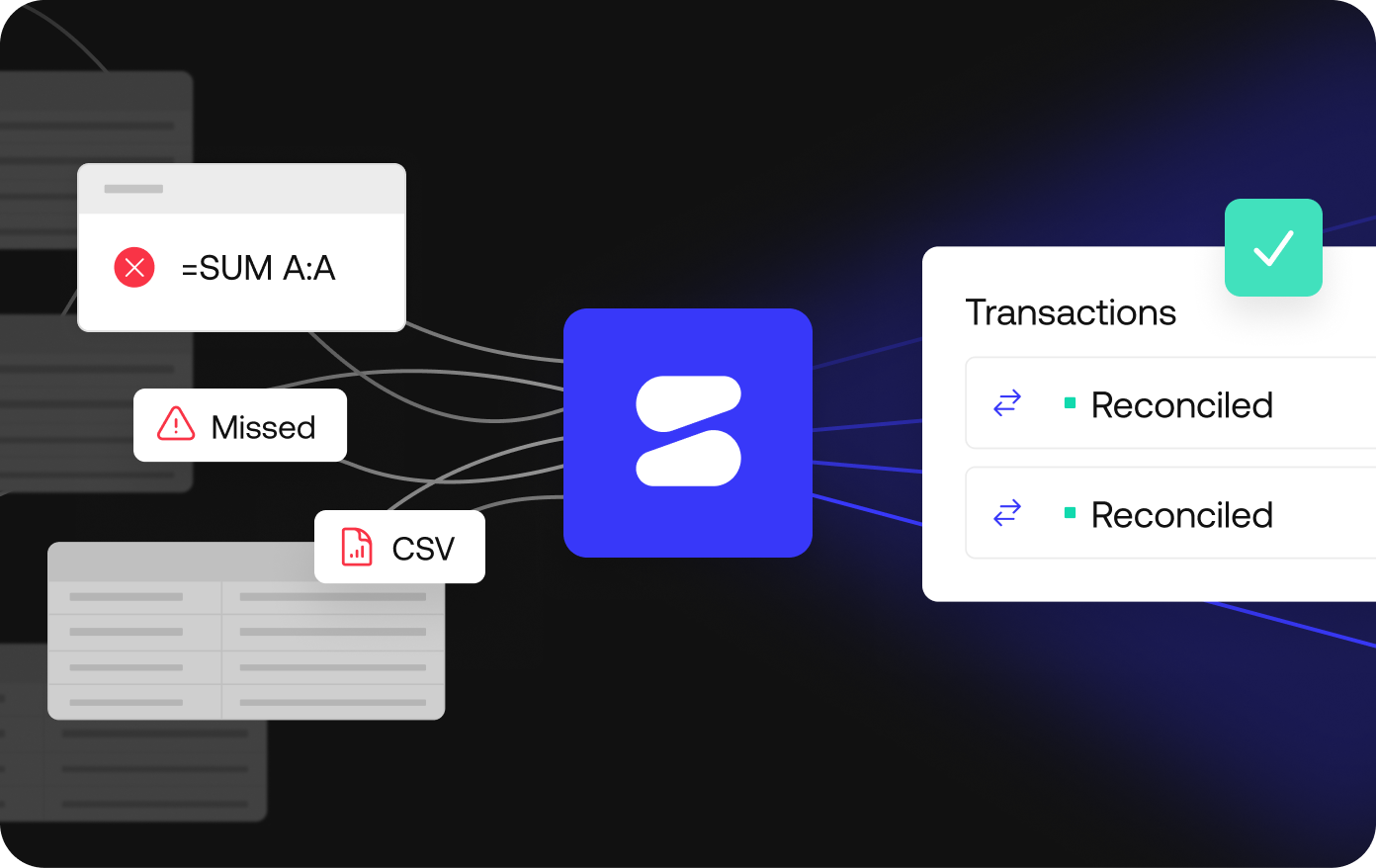
Simetrik’s reconciliation engine applies configured rules to compare records and separate matches from the exceptions that need investigation, with data preparation capabilities, source unions, date format normalization, before the matching runs.
Step 4: Separate timing differences and unrecorded transactions from real errors
Timing differences, deposits in transit, outstanding checks, resolve on their own in the next cycle. Unrecorded transactions (something that happened but nobody logged) and data entry errors need active correction. Unauthorized transactions and unexpected bank fees fall into the same review.
A $2,000 deposit recorded in the books but not yet showing on the bank statement is a timing difference. That same amount with no internal record at all is an unrecorded transaction, and it needs to be traced back to its source.
Step 5: Apply controls and flag anything unusual
Segregation of duties, making sure the person reconciling isn’t the person approving, is the most basic internal control here. Documenting every adjustment supports the audit trail and answers to regulatory requirements and regulatory compliance, even though reconciliation on its own isn’t a fraud prevention tool. The error detection that happens in this step is what functions, in practice, as early fraud detection.
Simetrik’s product materials describe approval flows with maker-checker separation for manual adjustments, along with a traceable audit trail over the rules, actions, and results of a reconciliation.
Step 6: Post adjusting entries and close
Every real difference becomes journal entries or adjusting entries reflected on the balance sheet. With cash reconciled, forecasting and treasury planning start from a reliable number instead of an estimate built on unverified data.
How Simetrik’s Cash In domain reconciles inbound cash
Every step above applies differently depending on which side of cash movement you’re reconciling. On the inflow side, that means confirming that customer payments, payment processor settlements, and deposits actually landed as recorded, before revenue gets booked against money that hasn’t cleared, the core of managing cash inflows well.
Simetrik’s Cash In domain reconciles collections across processors, acquirers, and bank statements on a continuous basis, rather than only at the point of deposit.
Cash Out and Simetrik’s control over outbound payments
The outflow side works the same way in reverse: every payout, withdrawal, or disbursement needs to be traced from the instruction that authorized it to the bank confirmation that it actually went out, with no duplicates and nothing sent to the wrong account, whatever mix of payouts, withdrawals, and disbursements make up your cash outflows.
Simetrik’s Cash Out domain applies the same logic, validating outbound payments from instruction through to bank confirmation.
Cash reconciliation vs. bank reconciliation and account reconciliation
Bank reconciliation is one source within the cash reconciliation process, specifically, crossing the bank against the books. Account reconciliation is the broader category still: it covers cash, but also accounts receivable, accounts payable, and any other account on the balance sheet. Cash reconciliation sits in the middle, more specific than account reconciliation, broader than bank reconciliation alone.
Manual cash reconciliation vs. automation
Manual data entry works when volume is low and sources are few. As accounts, currencies, or daily transaction counts grow, keeping the 6 steps running by hand becomes the bottleneck, since reviewing line by line stops scaling no matter how good the judgment behind it is. That’s exactly where cash reconciliation automation changes the equation.
Within its Cash In domain, Simetrik can compare expected movement against the records of the systems and participants involved, identify differences, and maintain a traceable view of status, the same kind of high-volume comparison that steps 1 through 4 of this article describe doing by hand.
Cash reconciliation process FAQs
What are the steps in the cash reconciliation process?
At a minimum: gather records from every cash source, prepare your internal accounting records, match transactions and compare balances, investigate discrepancies, apply controls, and post adjusting entries. The order matters more than the exact number of steps a given team uses.
What is a cash reconciliation form?
It’s a template, paper or digital, used to document the comparison: the recorded balance, the actual balance from source documents, each reconciling item, and a sign-off from whoever reviewed it. It’s the evidence trail, not the reconciliation itself.
What is a cash reconciliation statement?
It’s the finished output of the process: a document showing the starting balance, every adjustment that explains the difference, and the final adjusted balance that both the accounting records and the source documents agree on.
How often should the cash reconciliation process run?
Daily for high-volume cash operations, retail, payment processing, multi-location businesses. Monthly, tied to the close, is the minimum for lower-volume operations. The right cadence depends on how fast unresolved discrepancies would otherwise pile up.
What causes discrepancies in the cash reconciliation process?
Most are timing differences that resolve on their own. The ones that don’t are usually data entry errors, unrecorded transactions, unexpected bank fees, or occasionally an unauthorized transaction that needs investigating right away rather than waiting for the next cycle.
Next step: Run this process on connected, rules-based data
The cash reconciliation process works the same by hand as it does with cash reconciliation automation running underneath it, the difference is how much of the daily matching holds up on its own, without someone reviewing it transaction by transaction. You can compare expected movement against connected records.