Use Cases
Cash Out
Precise control over outbound payments
Control outbound payments with precision, no leaks, no duplicates. With Simetrik, you validate every payout from instruction to bank confirmation, instantaneously and continuously.
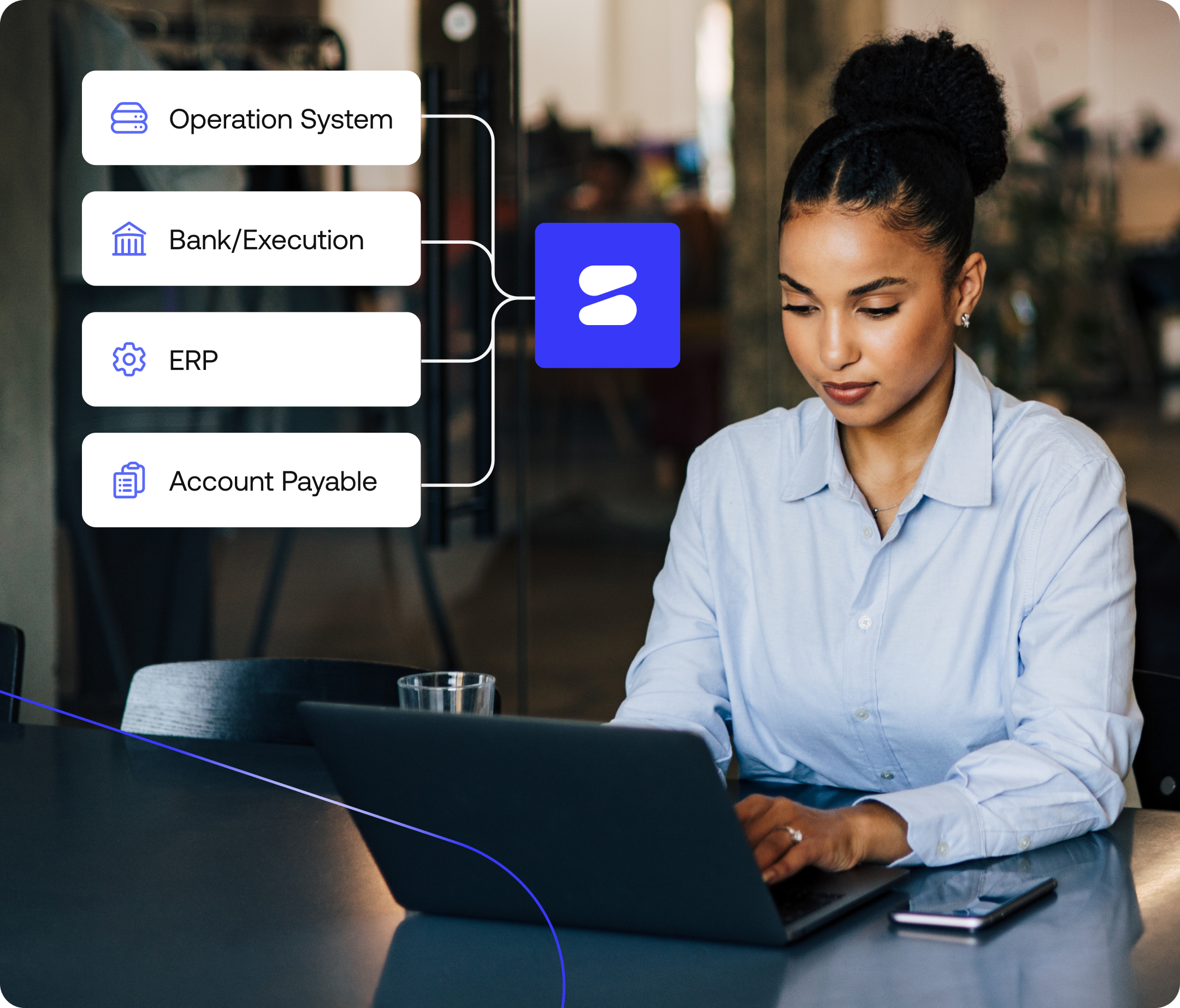
The outbound payment blind spot
Every payout your company executes passes through multiple checkpoints: internal approval, payout scheduling, bank execution, and merchant or user confirmation. Each step handled by a different system, each with its own data and timing.
Most teams only discover mismatches at month-end, buried in transitory account reconciliations. By then, duplicate payments have already left, overpayments have settled, and the recovery window is closing.
The challenge isn’t just paying on time, it’s proving every payment was correct. Without transaction-level control over the full payout lifecycle, errors compound silently until they surface in the P&L.
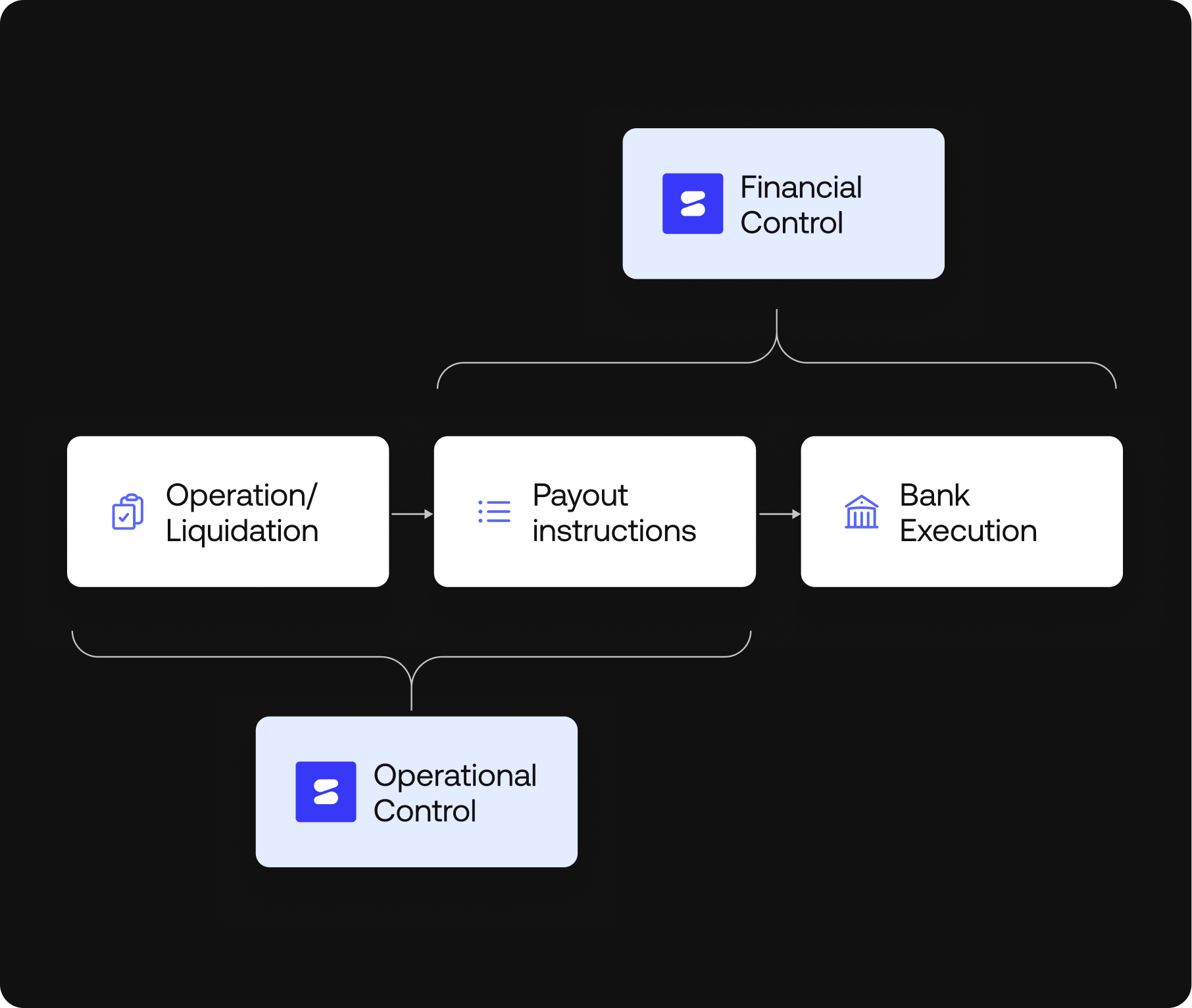
End-to-end Cash Out control
Simetrik integrates your internal operational data, payout execution summaries, and bank statements across multiple disbursement types, to validate that every instruction matches its execution, with full traceability from order to bank confirmation.

Payout Internal Consistency Check
Validate that every payout is backed by a valid payable, accurately calculated, and duplicate-free.
Payout Bank Check
Confirm that every disbursement is correctly settled and reflected in your bank statements.
What's at stake

Cash Flow Integrity
When instructions don’t match bank execution, disbursements go unreconciled. Simetrik finds them before they age out.
- Unreconciled Values ($)
- Outbound transitory aging

Leakages & Dispute Management
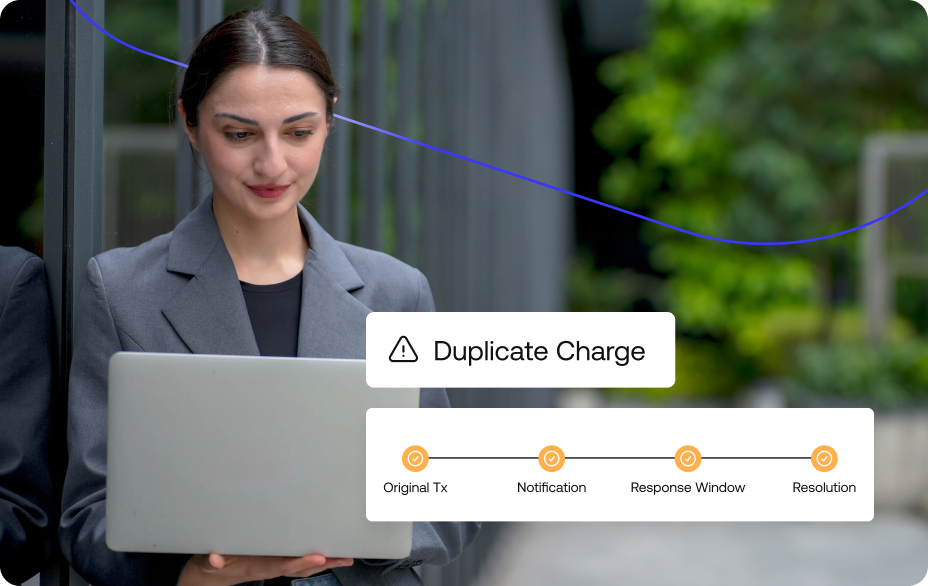
Duplicate payouts, incorrect calculations, and refund mismatches add up silently across merchants. Simetrik catches them at transaction level.
- Undetected Errors ($)
- Duplicate Transactions ($)
- Settlement Differences ($)
Payouts controlled.
What about the rest?
Outbound payments are just one layer. Explore how Simetrik extends control across your entire financial operation.
Profitability
Claims & Chargebacks
Protect what you’ve earned

Profitability
Fees & Billing
Know what you pay and collect

Continuous Closing
Accounting Automation
From operations to ledger
FAQs
How do you reconcile an outgoing payment from instruction to bank debit?
Compare the payment instruction with the execution record and the debit reported by the bank. Use the payment reference, beneficiary, amount and currency to establish the connection. This separates payments that were requested from payments that were executed and helps identify debits that lack a corresponding instruction.
What is the difference between a failed payout and a returned payment?
A failed payout was not completed as intended; a returned payment may have been executed before funds came back. Reconciliation should follow the original instruction through provider statuses and bank movements, including any return. That history matters when deciding whether the payment needs investigation or can be submitted again.
How can a team investigate duplicate disbursements?
Check whether the apparent duplication exists only in the source data or represents separate bank debits. Compare references, beneficiaries, amounts and execution records before deciding what happened. Record the evidence and assign the exception for review. Two transactions with the same amount can be legitimate, so an amount-only match is insufficient.
Can a batch debit be reconciled to individual payout instructions?
Yes. Simetrik supports configured matching rules that connect a grouped debit with the instructions behind it. Teams can define grouping criteria and tolerances, then review differences such as partial payments or separately charged fees. The control preserves the link between the batch total and the records used to explain it.
Does Simetrik execute outbound payments?
Simetrik provides financial controls over outbound payment data; the bank or payment system executes the transfer. Teams use configured rules to compare instructions, execution records and bank statements, then investigate exceptions. The resulting information can also support treasury’s reconciliation of bank balances without changing which system moves the funds.
Take Control of Every Outbound Dollar
See how Simetrik gives you transaction-level control over every dollar that goes out, from the moment it's instructed to the moment it clears the bank.