Trusted by world-class companies
Use Cases
Treasury teams can’t manage what they can’t see. Simetrik reconciles bank statements, confirms settlements, and monitors liquidity in real time, so your cash position reflects reality, not yesterday’s numbers.

in annual TPV reconciled
automatic reconciliation rate
daily records processed

Reconcile bank statements, confirm settlements, and monitor multi-currency positions automatically, so your liquidity view is always current.

Detect funding date deviations and late settlements the moment they happen, not during the next manual reconciliation cycle.

Confirm that every fee charged by partners and banks matches your agreements, and catch overcharges before they compound.
Cash position management depends on settlements that arrive when expected, bank statements that reconcile automatically, and fee charges that match your agreements. When those three things require manual work, the result is cash position estimates built on assumptions, and treasury decisions made without full visibility.
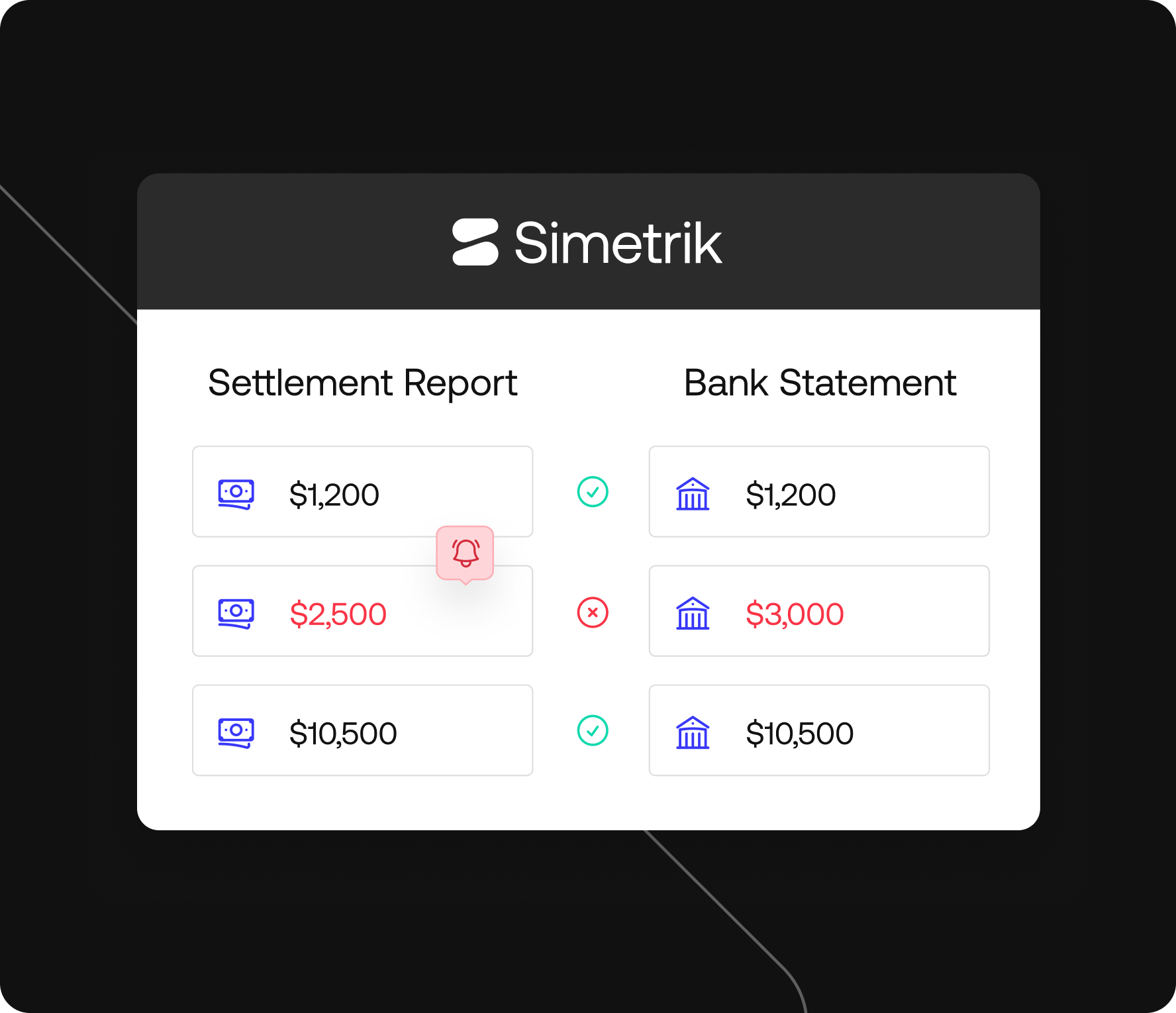
You can run automated reconciliation between settlement reports, internal records, and bank statements, across multiple accounts, currencies, and entities. Every funding deviation is flagged the moment it appears.
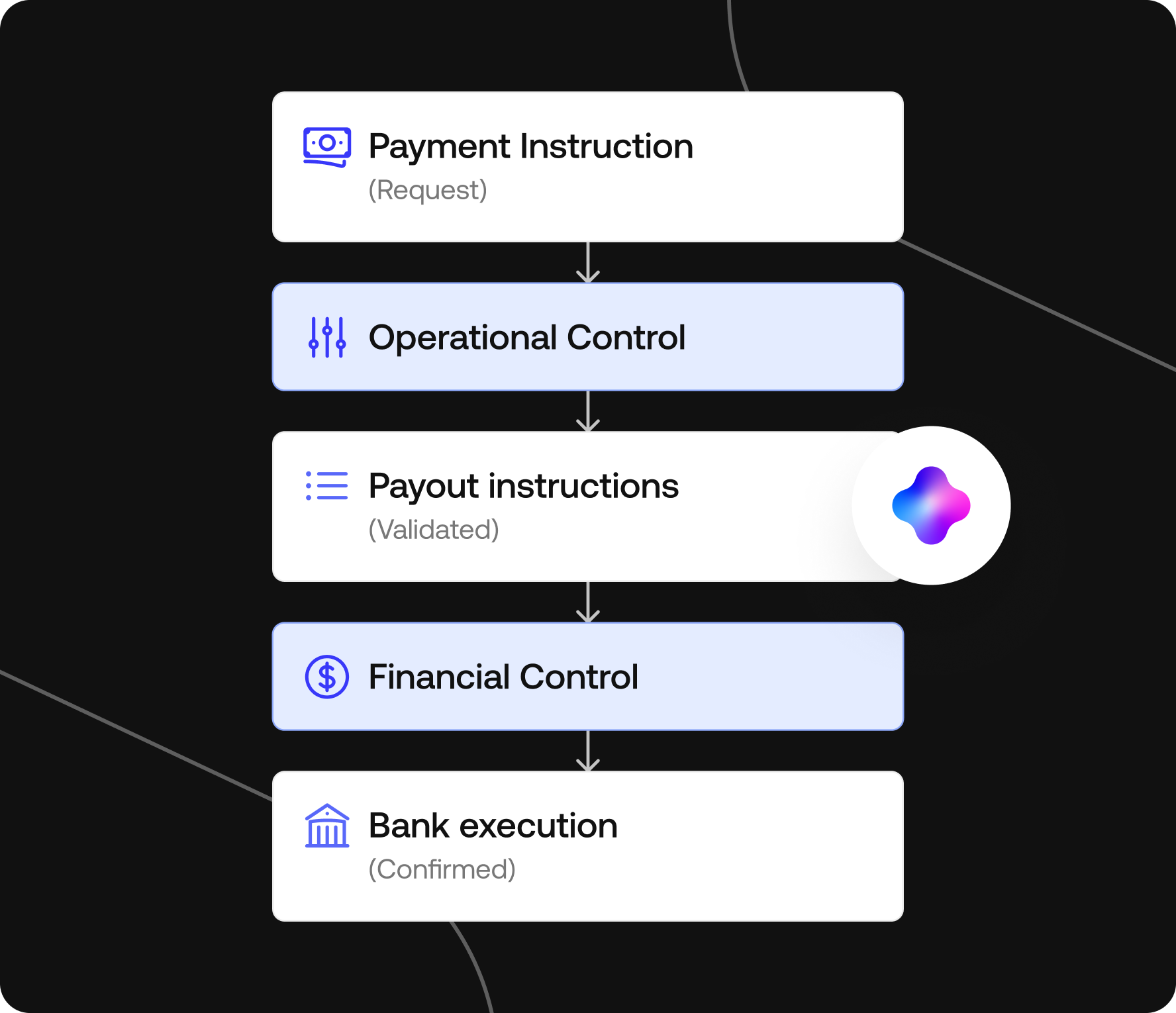
You can run pre- and post-execution checks on every outbound payment — confirming payout instructions are accurate, authorized, and reflected correctly in bank statements.
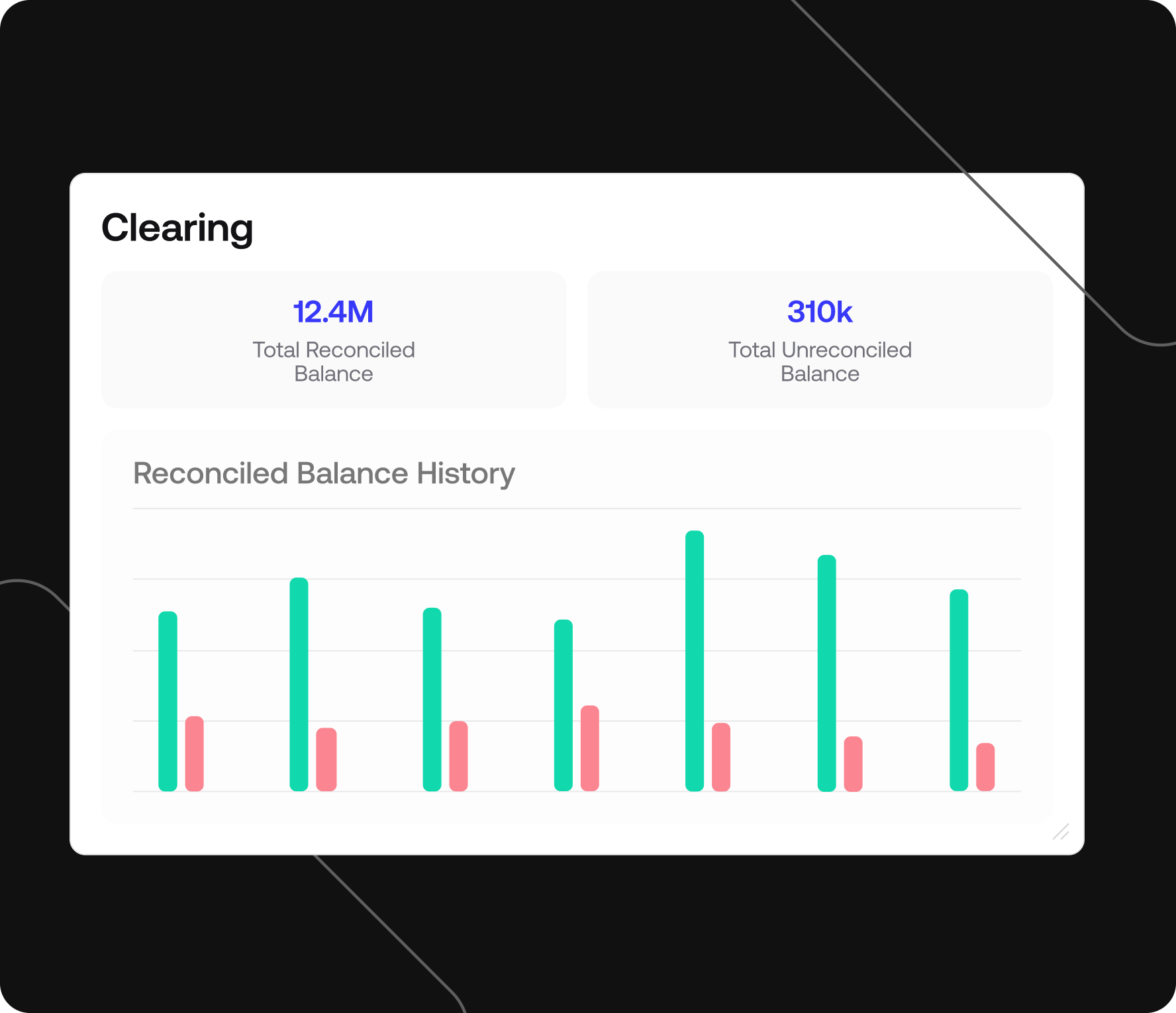
You can monitor your cash position across all sponsor banks, accounts, and currencies from a single dashboard, with automated alerts when positions breach thresholds.
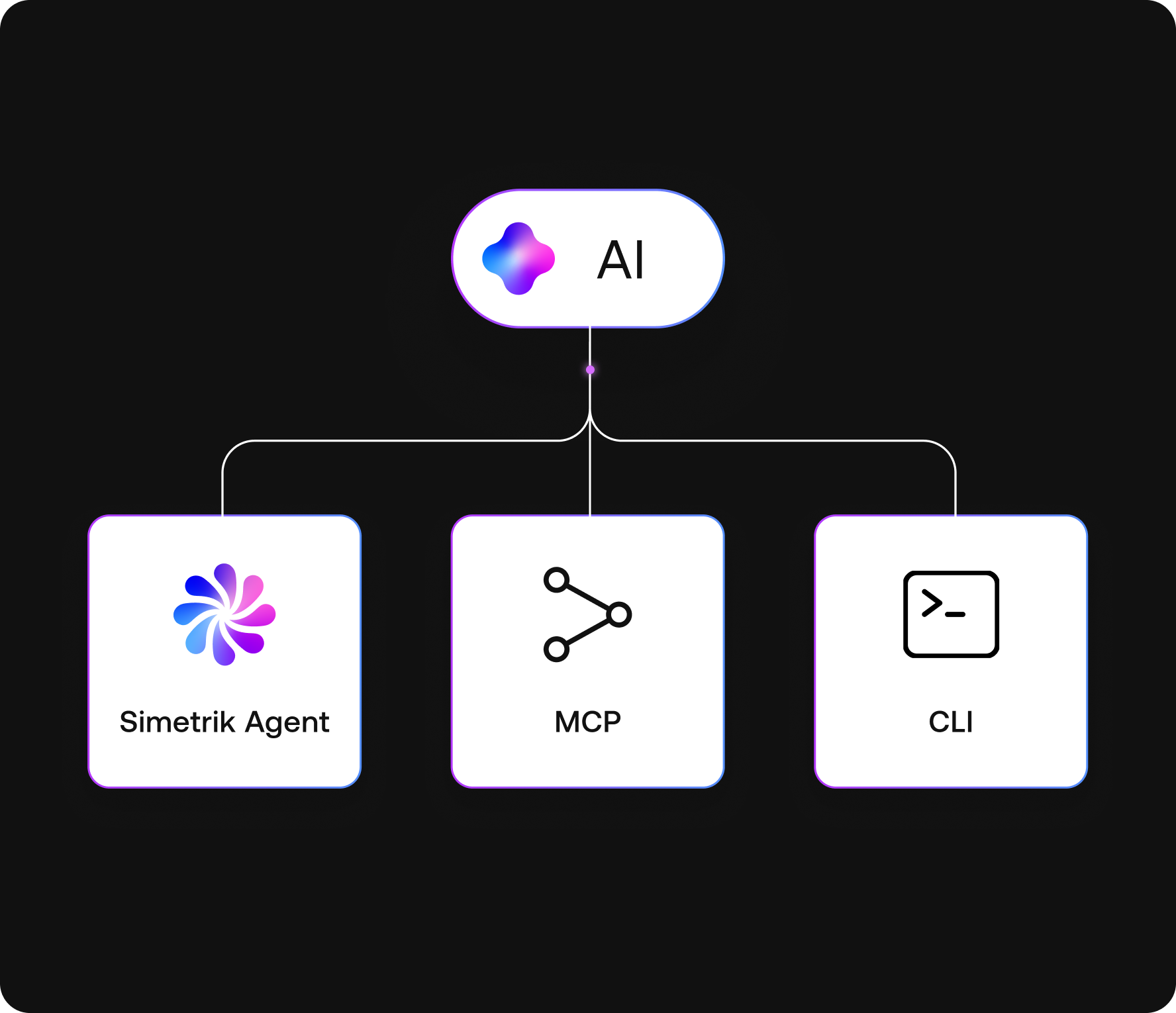
Simetrik’s AI layer monitors settlement patterns, flags anomalies in cash flows, and surfaces funding risks before they impact liquidity. The Simetrik AI Agent lets your team query positions, investigate exceptions, and manage workflows in natural language, or via MCP for programmatic control.
Trusted by world-class companies










Reconciliation compares bank-reported balances and movements with internal records so treasury can distinguish confirmed activity from unresolved items. A cash position report should identify its reporting cutoff and source coverage. That context helps the team understand whether a difference reflects an unsettled payment, missing data or an item that still needs review.
Reconcile at account, entity and currency level before consolidating the results. Use comparable reporting cutoffs and document any conversion rules used for a common-currency view. Keeping the original detail makes it easier to investigate differences and avoids allowing unrelated discrepancies to offset each other in a consolidated total.
A reconciled balance establishes consistency between the records being compared. Funds may still be subject to restrictions, holds or account conditions that affect availability. Treasury needs to distinguish those factors when using the balance for cash decisions. See the bank reconciliation guide for the underlying reconciliation process.
Compare the expected settlement date with the provider’s reported status and the bank posting. Check whether the difference comes from a reporting cutoff or from funds that have not arrived as expected. Incoming payment and settlement controls provide the transaction detail needed to explain that pending amount.
Simetrik can combine compatible bank, settlement and internal data to run configured reconciliation controls and organize exceptions. Treasury teams can use that evidence to investigate balances and movements with traceability to the underlying records. This financial control role does not include moving funds, providing financing or replacing the full scope of a treasury management system.
Simetrik gives treasury teams real-time cash visibility, automated bank reconciliation, and the settlement monitoring needed to operate with confidence at any scale.