Payments increasingly move in near real time across banks, payment service providers, card networks, platforms, and internal systems. Each participant can record a different amount, timestamp, fee, or settlement status, making liquidity visibility harder to maintain.
This complexity greatly complicates the role of treasury and finance teams. Variance among currencies, settlement times, and data management protocols makes it hard to track liquidity and accurately apply cash at scale, often leading to millions of unaccounted-for dollars a year.
How can the office of the CFO tackle liquidity and forecasting challenges when money moves faster than it ever has? Keep reading for the answer – and a look into the emerging world of AI reconciliation.
The short answer: reconcile transaction, settlement, bank, and internal records frequently enough to identify what has cleared, what is pending, and where exceptions remain. Reconciliation improves the data used for liquidity decisions, but it complements rather than replaces a treasury management system, cash forecasting, or funding execution.
What’s so hard about liquidity management?
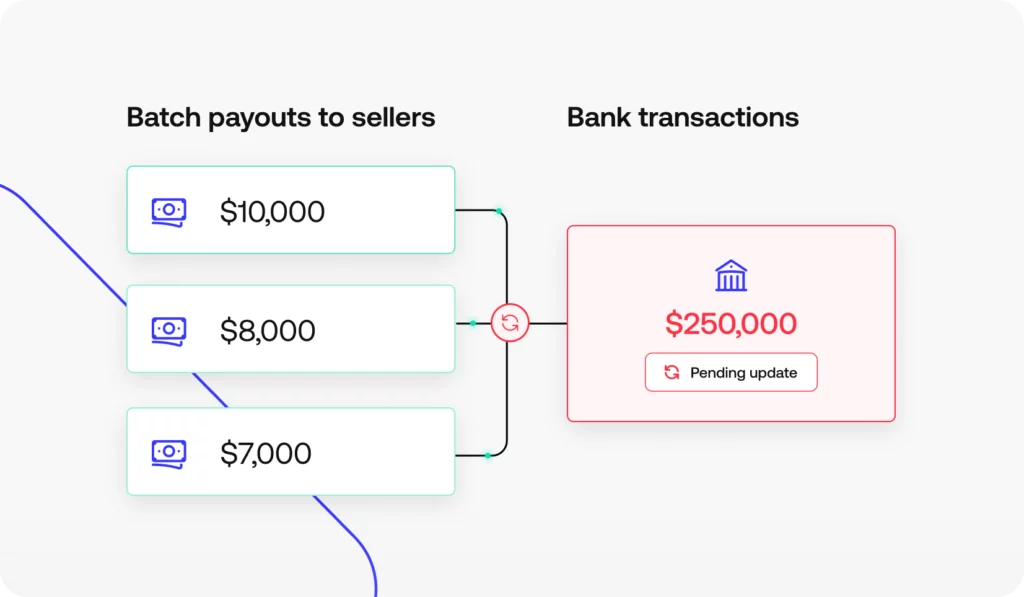
Treasury and finance teams used to be able to rely on batch settlement data to understand their cash positions. With the proliferation of flexible payment methods and new payment services, complexity grew.
The addition of real-time payment (RTP) networks brings even more nuance and risk to the market. These new payment rails give businesses faster ways to handle payroll, pay out merchants, and manage AR/AP – they also tend to push internal reconciliation and finance teams to the limit.
The challenges to managing liquidity effectively today include:
- Funds come and go many times throughout the day. Without a continuous tracking system, finance teams can’t be sure enough cash is available at any given point.
- Settlement times vary and don’t always coincide with transaction time stamps. Bank balances may be off by thousands of dollars, leading to poor funding decisions, unplanned fees, and unnecessary panic.
- Batch payments don’t map back to individual transactions. This adds hours of manual reconciliation to ensure cash and fees are applied correctly.
- Discrepancies and errors slow reconciliation and make it hard to calculate cash on hand.
Move too cautiously, and the opportunity cost is steep. Cash sits idle in accounts instead of being deployed to fund growth or reduce short-term borrowing. Move too aggressively, and you risk the opposite problem.
Underfunded RTP accounts, for example, can break funding agreements with sponsor banks – the very relationships that make instant payments possible. Without timely reconciliation, teams may not realize how quickly real-time payouts are draining balances until transactions start failing.
Cross-border settlements introduce another layer of complexity. Funds often pass through multiple correspondent banks and FX providers before reaching their destination. When timing or conversion delays aren’t captured immediately, treasury teams can mistake in-transit balances for available cash, exposing the business to liquidity gaps and currency risk.
Merchant payouts add risk, too, as marketplaces and retailers often pay merchants ahead of card network settlement. Without clear visibility into pending inflows, finance teams may overextend working capital, effectively funding payouts with money that hasn’t yet arrived.
To accurately monitor liquidity and maintain a clear line of sight into balances, AR, and AP across your entire payments ecosystem, look no further than reconciliation.
The role of reconciliation in understanding liquidity
Reconciliation helps finance teams manage liquidity and cash flows by maintaining accuracy and financial integrity at every step of every transaction.
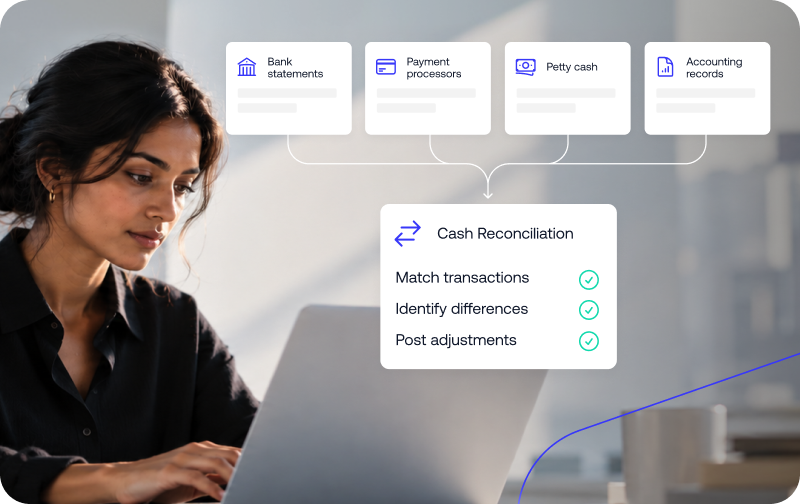
At the most granular level, the reconciliation process validates and matches transaction records across all parties. At a higher level, it ensures operational balances accurately reflect the reality of the company’s cash position.
Once reconciled, the data can be used to make all kinds of decisions about liquidity: whether to acquire more funding, what payment terms to offer or accept, how to allocate working capital, and many more.
But while AI and automation have transformed other key enterprise workflows, too many companies have yet to invest in modern reconciliation solutions that can handle the volume and complexity associated with real-time, global payments today.
The problem with legacy financial platforms
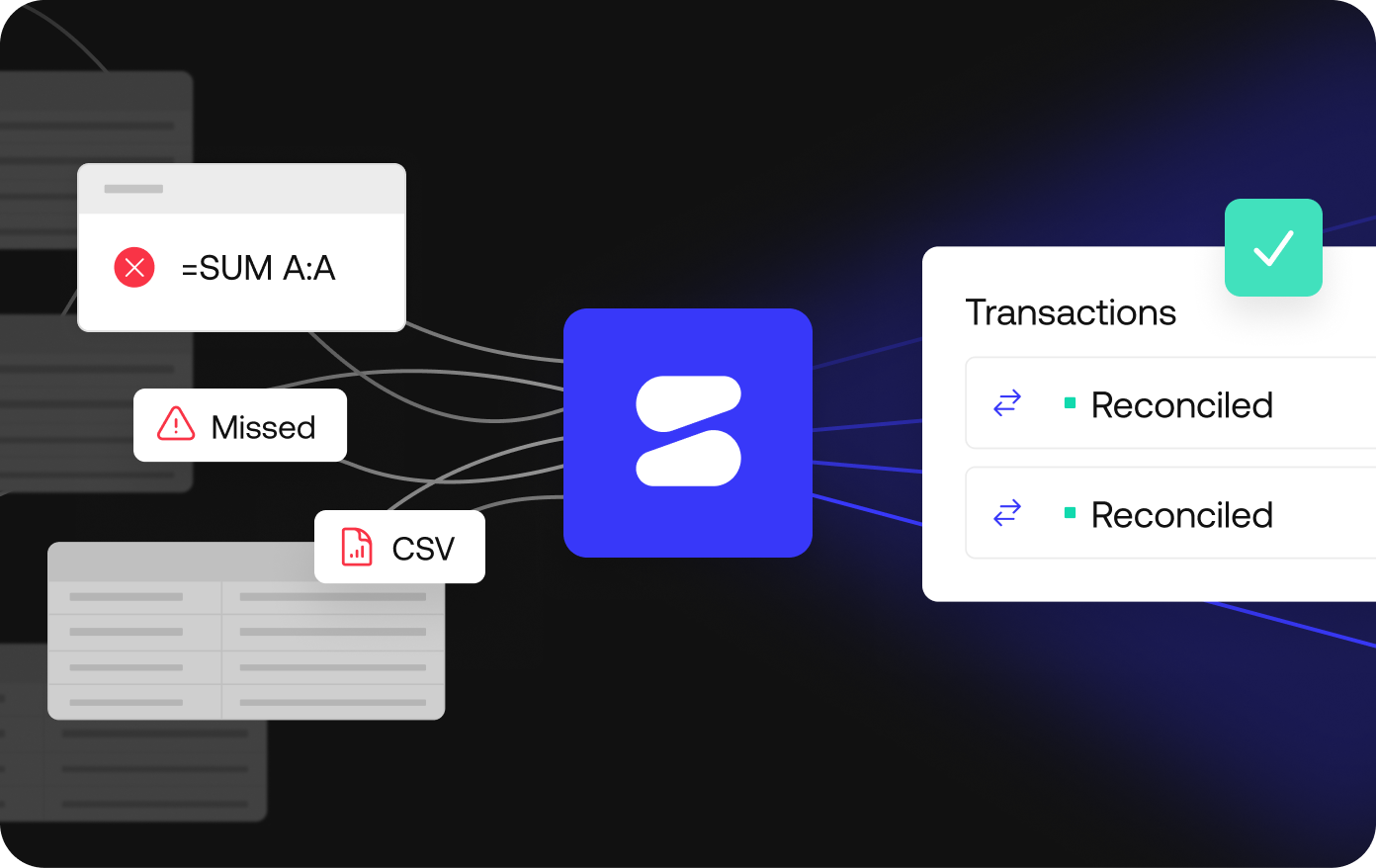
Many finance teams still rely on manual entries, spreadsheets, and brittle systems that can’t paint a real-time picture of cash flows and liquidity. Even with a strong treasury management system (TMS), the gap between balances shown in banking systems or financial analytics tools vs the reality of minute-by-minute transactional data leads to substantial discrepancies and excess costs.
Legacy, manual solutions aren’t just slower, they suffer from poor interoperability – too many disparate data formats, currencies, and protocols muddy visibility and hinder finance teams’ ability to use reconciled data for critical decision-making around liquidity.
Fragmented tech stacks also force engineering to spend time on costly integrations and workarounds, rather than working on initiatives that will eventually drive revenue. The bottom line? It’s expensive to stick to the status quo.
How transaction reconciliation improves liquidity visibility
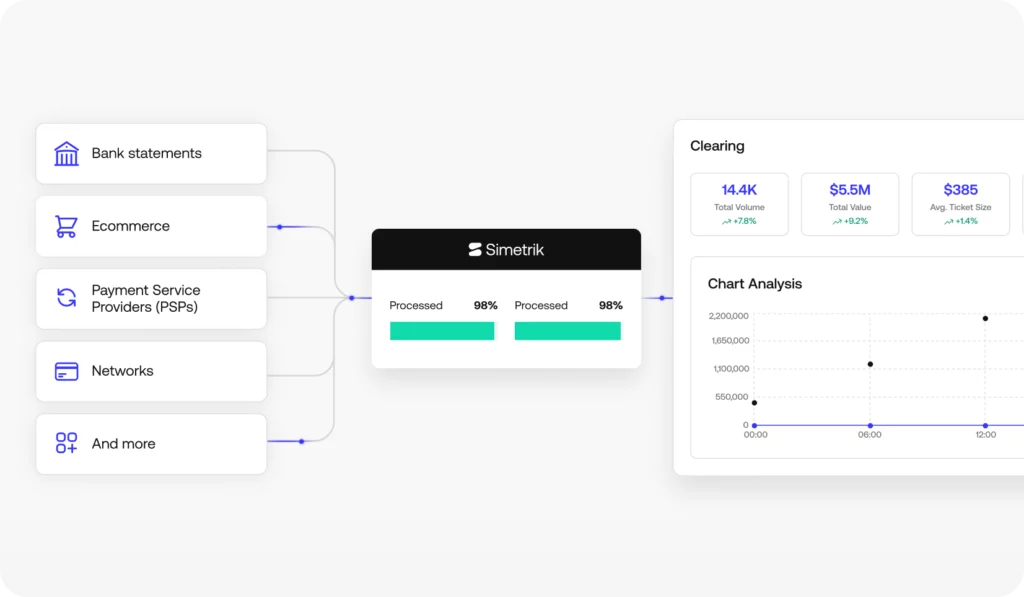
AI-assisted reconciliation helps finance teams improve the accuracy and timeliness of data used for working-capital and funding decisions. Modern platforms apply deterministic matching rules at scale, surface exceptions, and produce traceable dashboards and reports for treasury and finance teams.
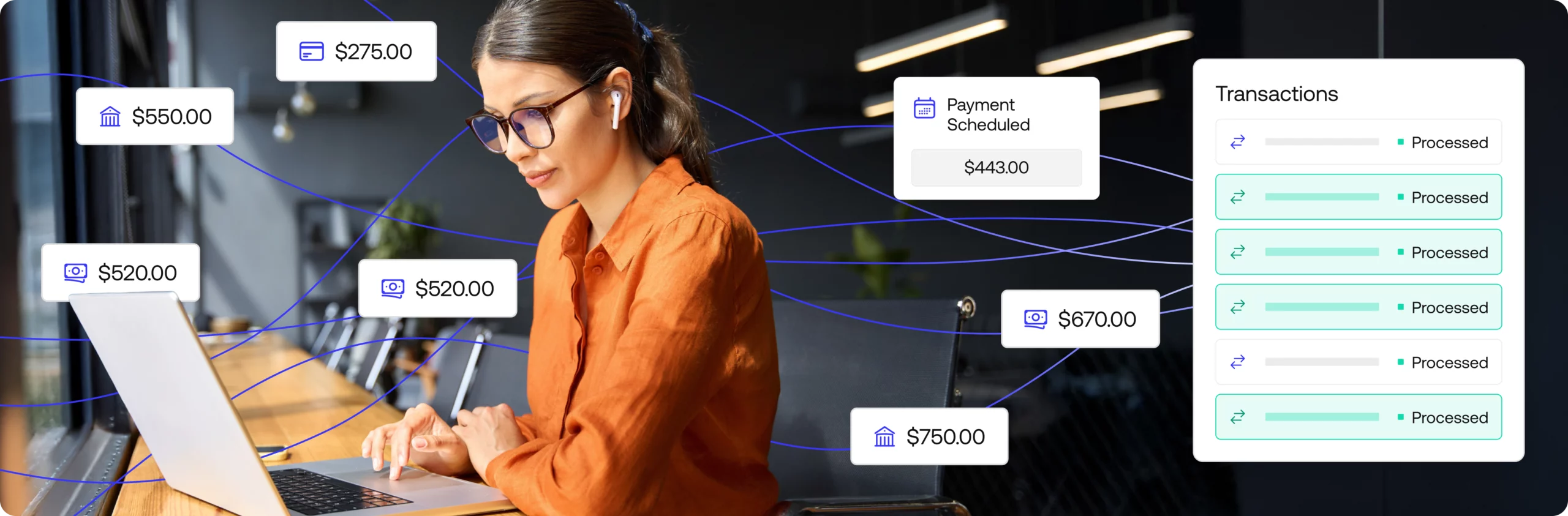
These newer, AI-enhanced systems are designed to handle exactly the kind of high-volume, complicated transaction data that enterprise finance teams struggle with. Incoming and outgoing payment records can be validated and matched across PSPs, real-time payment rails, card networks, banks, and internal systems, with exceptions routed for review.
Unlike legacy and manual solutions, AI reconciliation centralizes all of your transaction and finance operations data into a single source of truth, standardizing records and identifying gaps so operational balance views can be refreshed as new data arrives. This gives teams a more reliable view of cleared, pending, and unmatched activity that can inform prefunding decisions on real-time payment rails.
Treasury and finance decision-makers can log into their TMS, business intelligence tools, ERP, or any other connected system and work from the same reconciled dataset, reducing uncertainty in liquidity analysis.
Strengthen liquidity with complete visibility and control on Simetrik
Simetrik is an AI-assisted reconciliation platform for complex finance operations where liquidity decisions depend on timely, traceable transaction data.
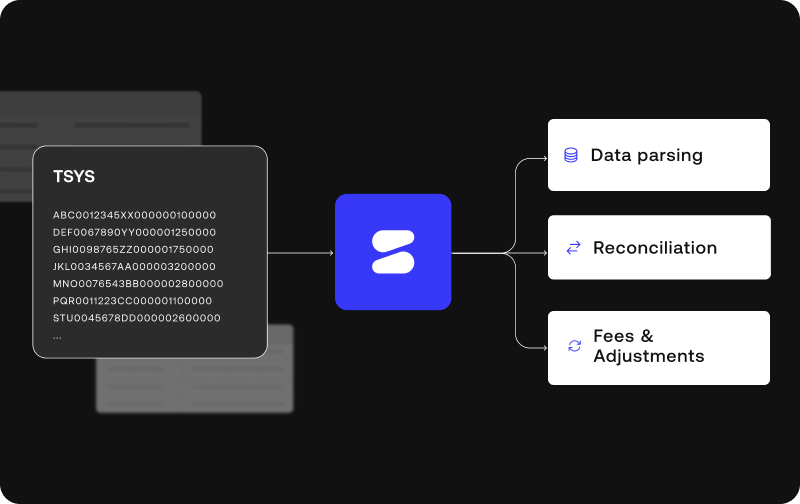
The platform ingests transaction data from any source and system, standardizing it and applying configurable, deterministic matching logic. Reconciled outputs and exception data can then feed connected ERPs, treasury systems, and business intelligence tools.
This level of automation and efficiency lets your finance team spend less time on repetitive matching and more time reviewing exceptions and supporting forecasting. Depending on the workflows and data sources configured, teams can use Simetrik to:
- Compare operational balances with transaction and settlement data
- Include prepayments and credits in reconciled balance views
- Batch payouts and bulk payments from PSPs are automatically disambiguated
- Surface aging receivables for follow-up in connected workflows
- Fraud and risk models are improved with trusted, reconciled data
- Detect errors and route discrepancies for governed resolution
- Feed reconciled data into the TMS and ERP for liquidity analysis
Simetrik helps finance and treasury teams transform their operations while maintaining global governance and control. To learn more about how our AI reconciliation platform improves liquidity and drives profitable decision-making, explore our solutions or get in touch with us to schedule a demo.