Use Cases
Reconciliation for Crypto Exchanges
Every fiat and on-chain movement, confirmed
Crypto exchanges reconcile across banking rails, blockchain transactions, and custody accounts, each with different settlement finality and regulatory requirements for reserve proof. Simetrik gives your team a continuous integrity layer from fiat on-ramp to on-chain.

>99.9%
Automatic reconciliation across fiat and on-chain transaction flows
24/7
Balance integrity across every wallet and custody account
50%
Reduction in audit preparation time with transaction-level evidence
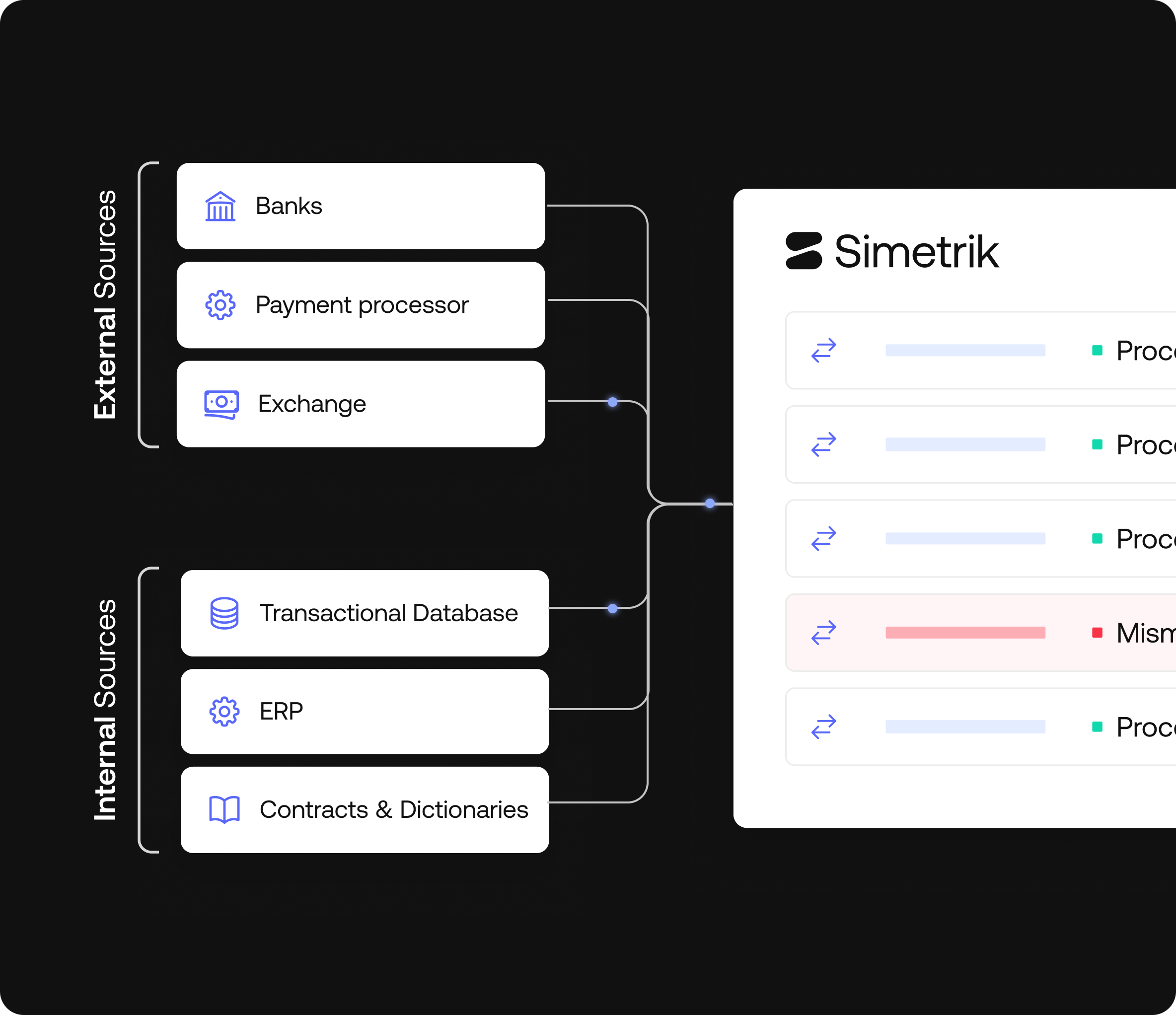
Confirm every fiat deposit
Crypto exchanges move across banking rails, blockchain, and custody accounts, each with its own settlement finality and reserve requirements. Simetrik gives you a continuous integrity layer, from fiat to on-chain.
- Bank deposit confirmed against payment processor and exchange credit
- Multi-currency on-ramps: USD, EUR, BRL, MXN, or any other, all confirmed
- Unudual and pending deposits flagged in real time
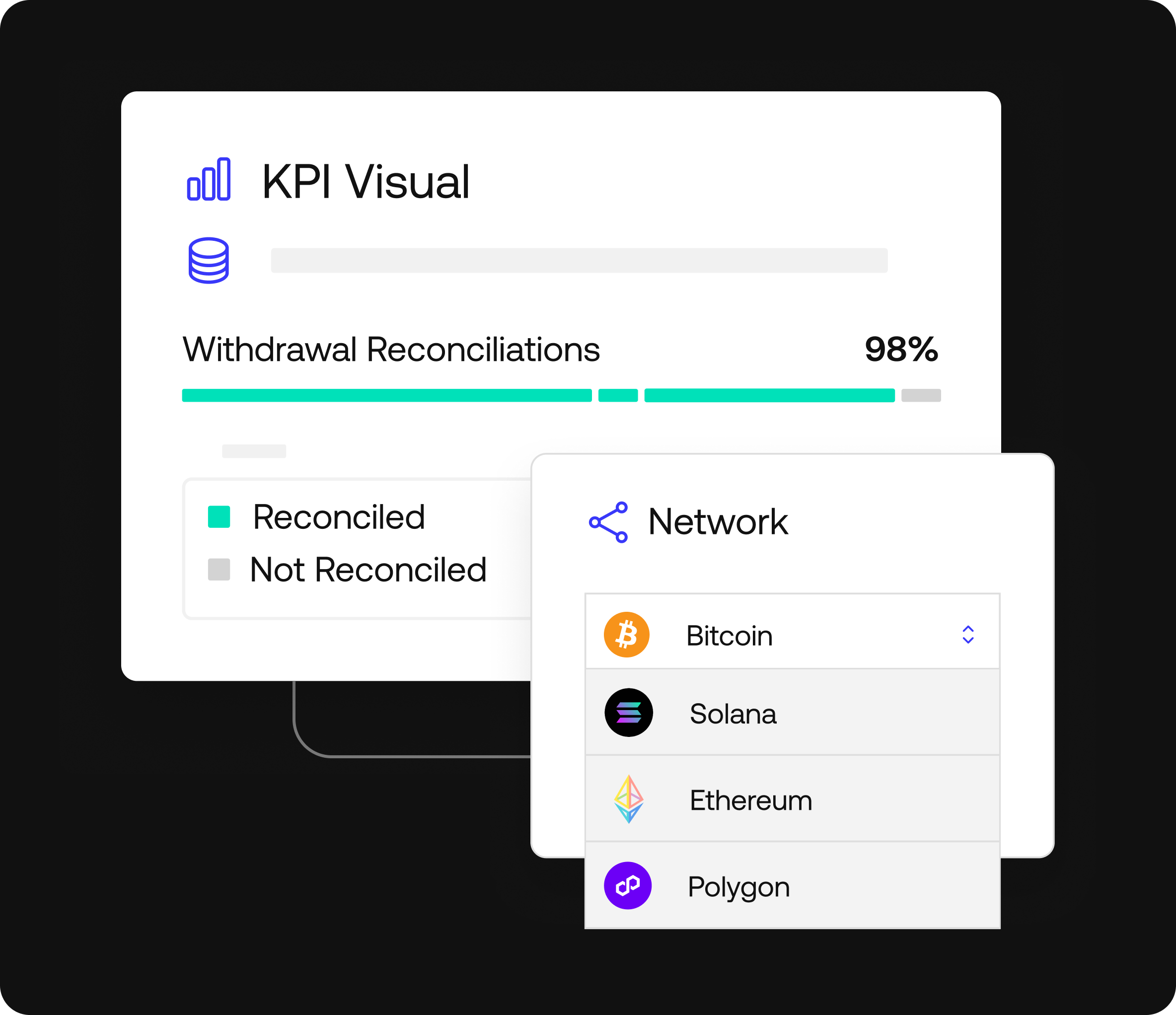
Validate every withdrawal, fiat and on-chain, before it clears
Simetrik validates every fiat off-ramp and on-chain withdrawal against the request, with blockchain-level confirmation.
- Fiat off-ramp: withdrawal request vs bank transfer vs final credit
- On-chain withdrawals confirmed against blockchain transaction hash
- Duplicate withdrawal detection before funds leave custody
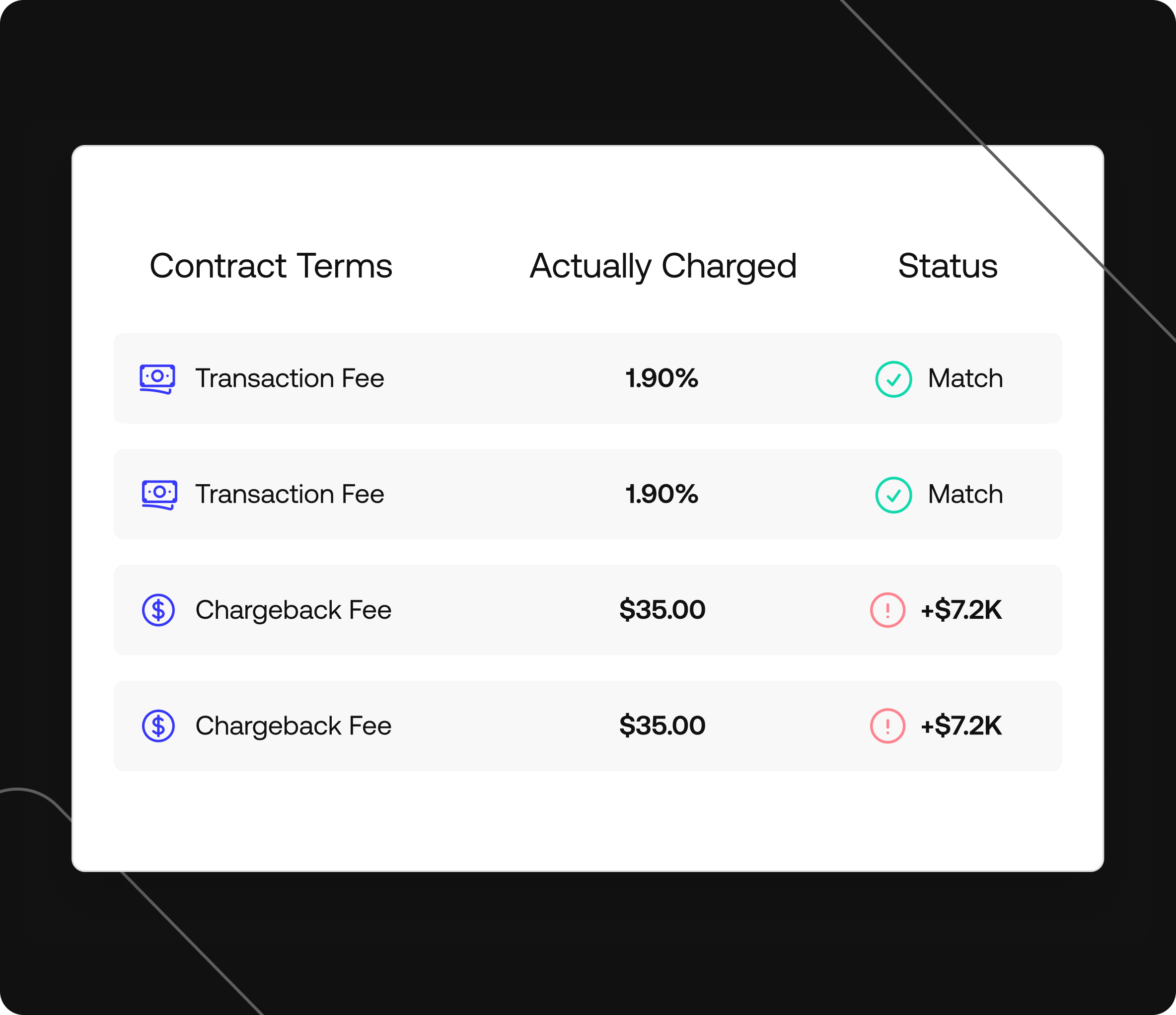
Validate every trading fee collected
Trading fee discrepancies between your engine, custody system, and settlement records accumulate silently. Simetrik continuously validates collected fees and flag them before they reach your books.
- Maker/taker fees validated against fee schedules per user tier
- Staking rewards and custody fees confirmed at account level
- Audit-ready fee reports for every asset and trading pair
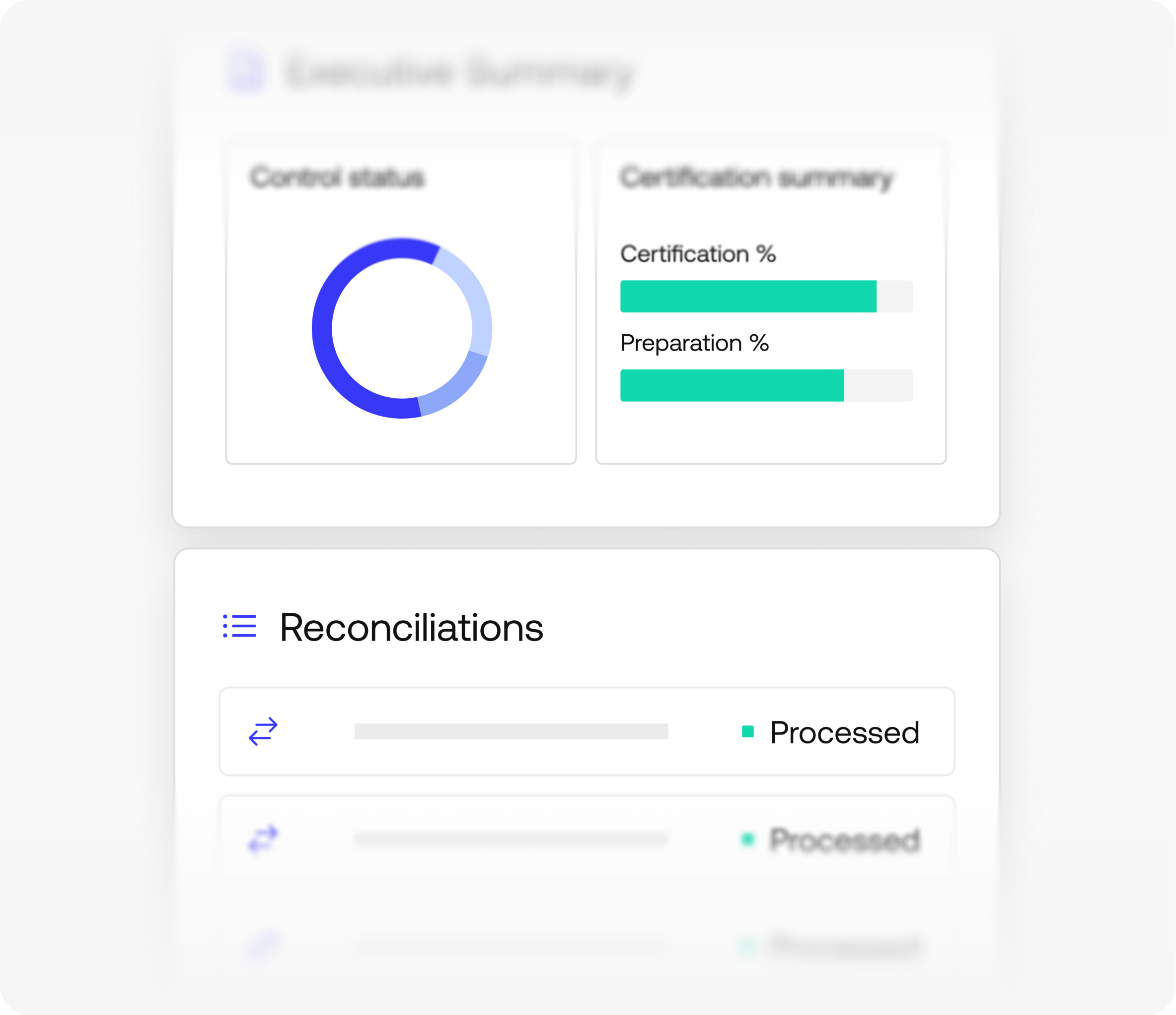
Prove reserves continuously. Satisfy regulators on demand.
Regulators and users demand proof that your reserves match your liabilities. Simetrik maintains continuous balance integrity across every wallet and custody account. Demonstrating proof without the manual work.
- Wallet balances reconciled against custody and bank records, daily
- Proof of reserves evidence generated from verified transaction data
- AML transaction monitoring linked to reconciled flow data
- Audit trail from reserve report to on-chain confirmation, in seconds
Built for the complexity of digital asset operations
From daily settlement to regulatory reporting, Simetrik delivers trust at every layer.

On-ramp and off-ramp accuracy
Every fiat deposit and withdrawal confirmed before it hits your ledger. Real-time reconciliation across banking rails, processors, and blockchain networks.

Custody and reserve integrity
Continuous balance reconciliation across every wallet and custody account. Reserve proof generated from verified data, not spreadsheet estimates.
Fee accuracy, at trading scale
Validate every maker/taker fee, custody charge, and staking reward at transaction level. Catch discrepancies before they erode your fee revenue.

AI-native by design
Anomaly detection on fiat and on-chain flows, fraud pattern identification, and smart reconciliation workflows powered by clean, verified exchange data.
Real results from crypto exchanges like yours.



"Simetrik allowed us to unify a complex financial ecosystem — banks, PSPs, and multiple blockchains — into a single source of truth. Today, we close the balance sheet on time and in compliance, with confidence."
Federico Goldberg, CEO, Manteca
FAQs
What needs to be reconciled in a crypto exchange operation?
A crypto exchange needs to connect internal transaction records with blockchain movements and records from relevant custodians, banks or other counterparties. The control should distinguish deposits, withdrawals, transfers and internal activity. Aggregate balances are useful, but transaction-level references and statuses are needed to explain mismatches between sources.
How do teams reconcile on-chain movements with off-chain records?
Start by defining which records describe the same event. Preserve the internal transaction ID, asset, network, quantity and timestamps, together with the transaction hash when available. Custodian or counterparty references may also be needed. A similar amount alone is not enough to establish that two records represent the same movement.
How should network fees and timing differences be handled?
Keep the fee amount and the asset in which it was charged separate from the transferred quantity where the source data allows. Compare the statuses and timestamps reported by each system before treating a movement as missing. Changes in valuation should also be distinguished from differences in the quantity of assets recorded.
How can Simetrik support reconciliation for a crypto exchange?
Simetrik can prepare data from compatible sources and apply configured rules to compare operational records, with traceability back to the inputs. Teams define the relationships between movements and investigate exceptions. Controls over incoming and outgoing funds can be explored through Cash In and Cash Out, while the exchange retains responsibility for its operational decisions.
Is crypto reconciliation the same as crypto tax accounting?
Crypto reconciliation checks whether records agree and documents differences. Tax accounting involves separate rules for classification, valuation and reporting. Simetrik supports financial controls over the data; that role does not establish a tax position or guarantee compliance. Reconciled operational records may support subsequent accounting work without replacing it.
Ready to reconcile every on-chain and fiat movement?
Join 180+ financial institutions that trust Simetrik to process 2.5 billion records daily, from fiat on-ramp to on-chain settlement.