Use Cases
Cash In
Full control over your inbound cash flows
Secure inbound cash flows and eliminate invisible leakage. With Simetrik, you reconcile every inbound transaction against every processor, gateway, and settlement report, instantaneously and continuously.
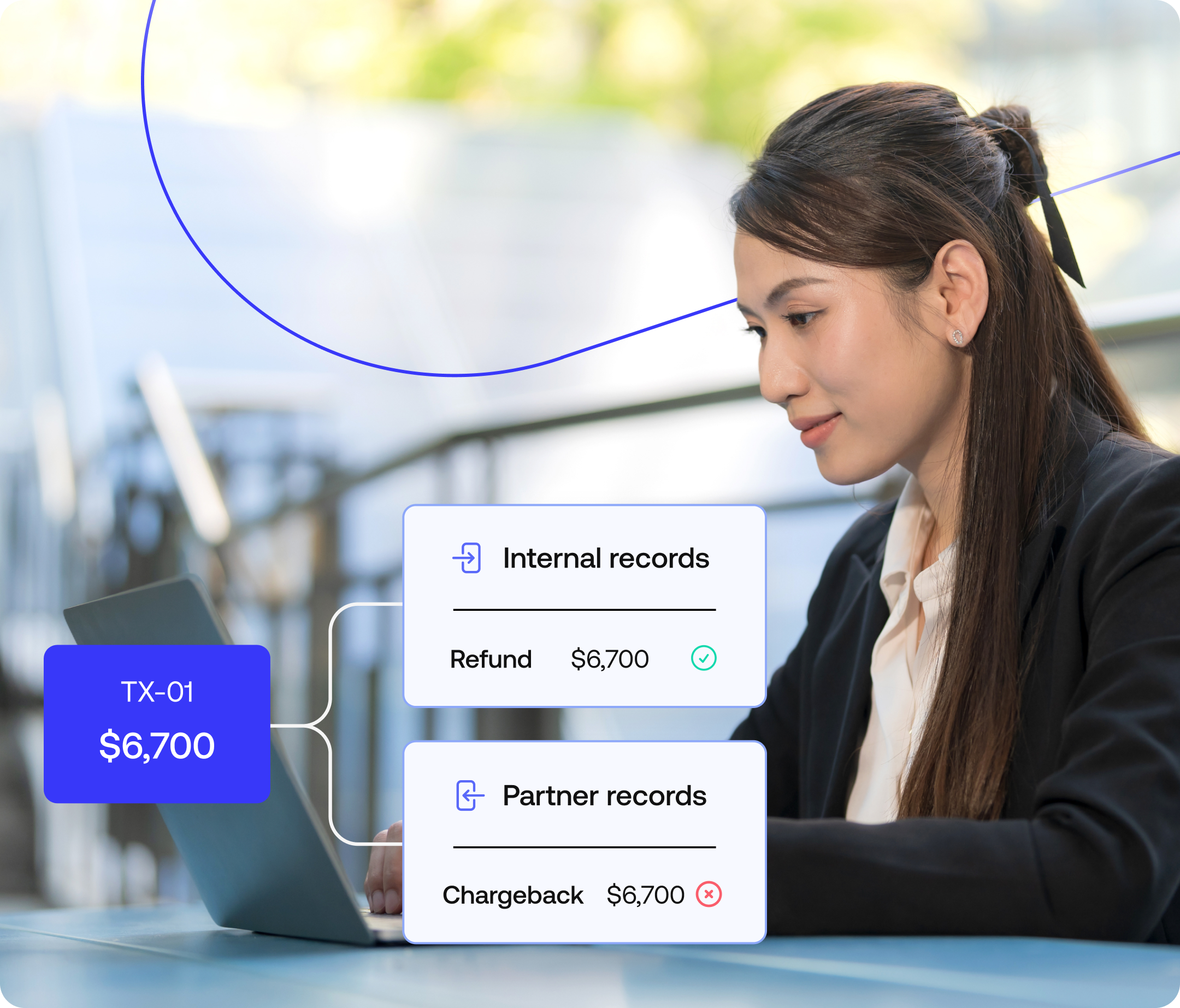
The inbound cash flow blind spot
Every transaction that enters your ecosystem, whether through cards, instant payments, cash, or crypto, passes through multiple hands: processors, acquirers, banks, networks. Each recording it differently. At transaction level, the gaps between what you processed, what your partners confirmed, and what landed in your bank account are too complex to track manually.
Most teams only catch these discrepancies at month-end, buried in spreadsheets or fragile internal scripts. By then, the window to recover funds has often closed.
The challenge isn’t volume alone, it’s the variability. Every partner sends data in a different structure, and those formats change constantly. Without transaction-level control, leakage stays invisible until it hits the P&L.
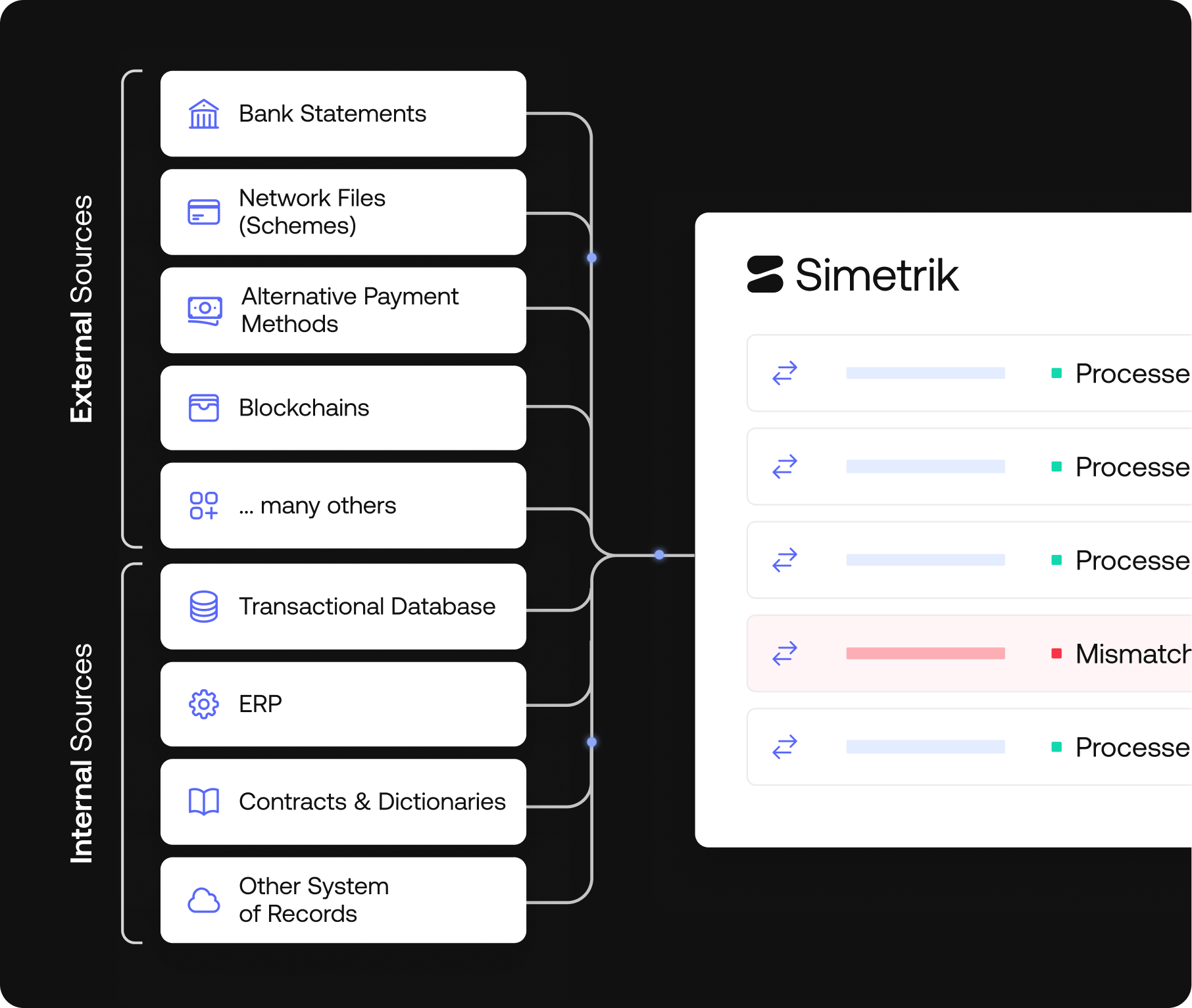
End-to-End Cash In control
Simetrik integrates your internal operational data, your partners’ transaction confirmations and settlement reports, and your bank statements, to validate that equivalent data points match at every stage of the transaction lifecycle, with full traceability from processing to bank deposit.

Transactional Third-Party Confirmation
Validate that every payment, cancellation, and refund your system processed is accurately reflected by your partners.
Settlement Confirmation
Confirm that settlements are executed as scheduled and funds are fully credited to your accounts.
What's at stake

Cash Flow Integrity
When settlements don’t match bank deposits, unreconciled amounts become invisible exposure. Simetrik surfaces them before they age out.
- Unreconciled Amount ($)
- Value at Risk ($)
- Settlement Delay (days)

Leakages & Dispute Management
Duplicate credits, missing transactions, and FX conversion errors add up silently across reporting entities. Simetrik catches them at transaction level.
- Undetected Errors ($)
- Duplicate Transactions ($)
- Settlement Differences ($)
Cash In is where it starts. It's rarely where it ends.
Inbound cash is just the first layer. Explore how Simetrik extends control across your entire
financial operation.

Funds Flow
Cash Out
Precise outbound payments. No leaks, no duplicates.
Profitability
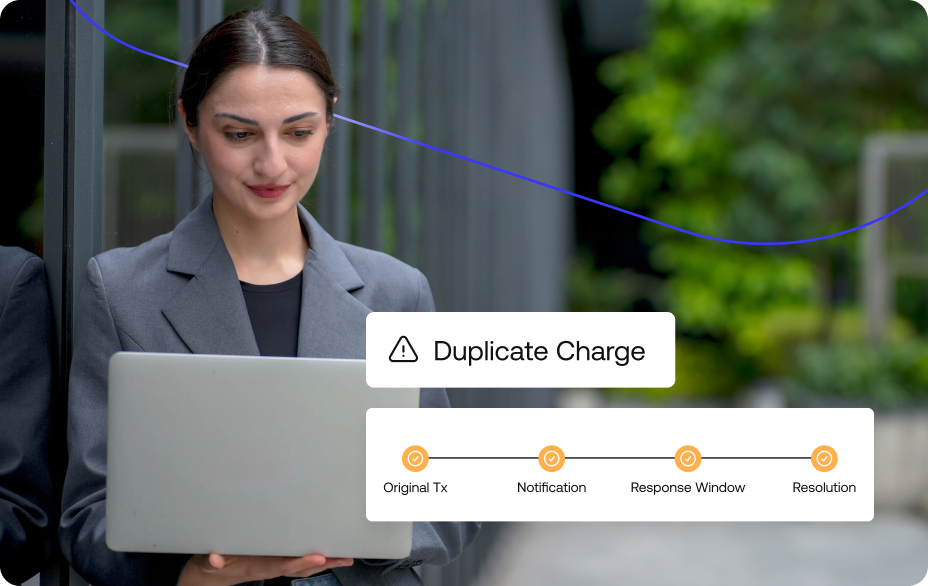
Claims & Chargebacks
Contain losses from disputes and chargebacks.

Profitability
Fees & Billing
Ensure every fee matches the terms agreed.
FAQs
What does incoming payment reconciliation verify?
Incoming payment reconciliation checks whether recorded customer payments can be traced to processor settlements and bank deposits. A successful payment status alone does not establish that the funds reached the bank. Transaction references, amounts, currencies and settlement dates provide the basis for matching, including cases where one deposit covers many payments.
How do you reconcile a net settlement against gross sales?
Start with the transactions included in the settlement, then account for the deductions and adjustments shown in the processor report. Fees, refunds, chargebacks and reserves can explain why a deposit is lower than gross sales. Keep unexplained differences separate. Comparing the fees charged with the commercial agreement belongs to fee and billing controls.
Can one bank deposit be matched to multiple customer payments?
Yes. Simetrik supports configurable one-to-many and many-to-many matching, so a grouped bank deposit can be reconciled against its underlying transactions. The team sets the grouping criteria and tolerances. Records that do not meet those rules remain available for investigation, with a traceable connection to the source data.
How should unsettled payments be handled at a reporting cutoff?
Keep payments awaiting settlement separate from funds already received, and retain the transaction, settlement and bank posting dates. Compare the expected settlement date with the processor’s reported status before classifying a payment as late. A timing difference needs a documented explanation; matching amounts alone are not enough to close it.
How does Simetrik support cash-in controls across payment providers?
Simetrik prepares compatible data from payment providers, internal systems and banks, then runs the reconciliation rules configured for the operation. Teams can review missing receipts, amount differences and unmatched settlements using the underlying records. Broader payment operations controls connect this incoming-funds view with fee checks and dispute tracking.
Stop losing revenue to invisible gaps
See how Simetrik gives you transaction-level control over every dollar that flows in, from the moment it's processed to the moment it hits your bank account.