Use Cases
Success Case MOVii
MOVii scaled its operation 58x with automated reconciliation
How a Colombian banktech reconciled 200M+ monthly transactions and cut control times by 48%
58X
operational volume growth
99%
transaction reconciliation rate
48%
reduction in control times
About MOVii
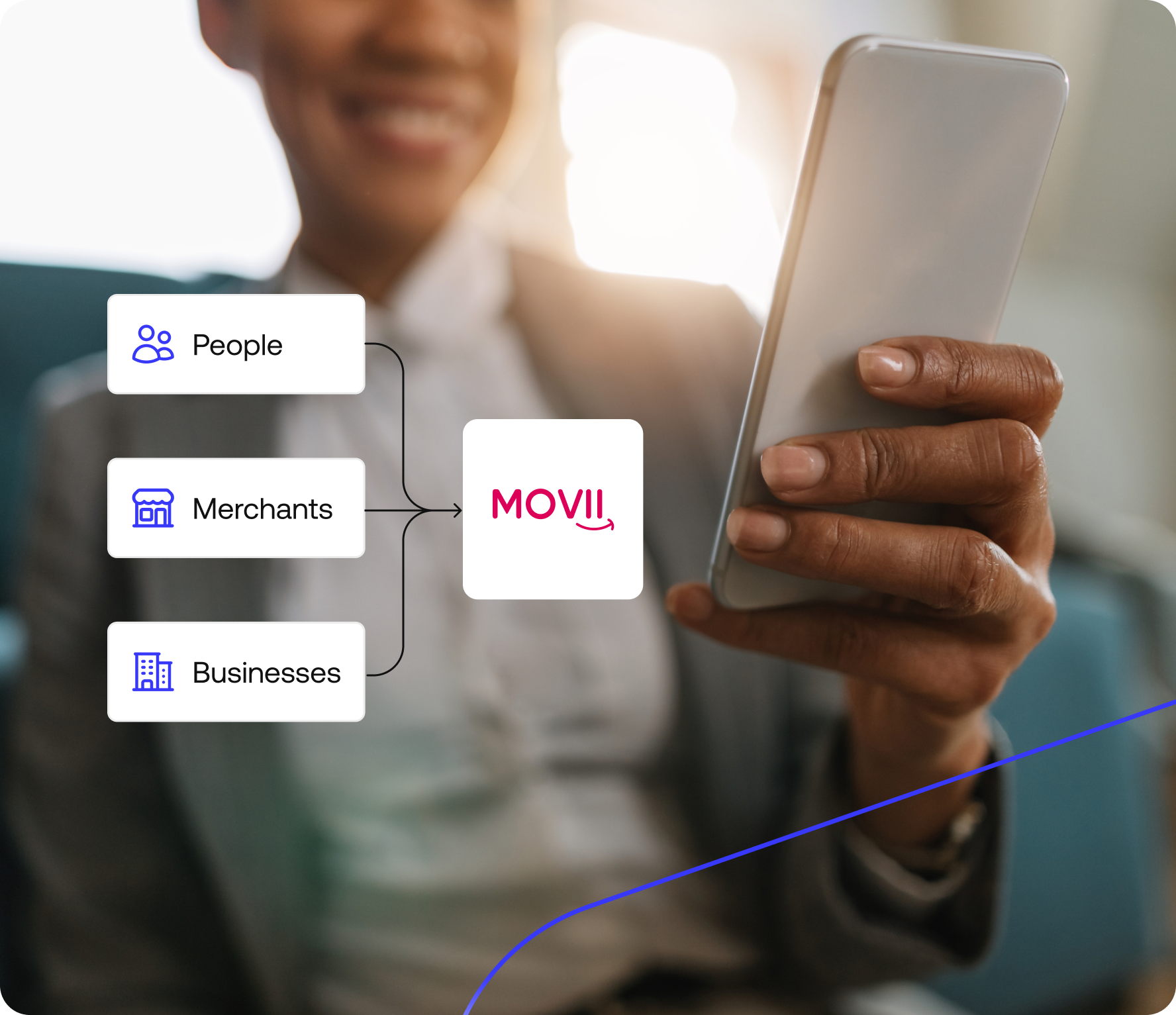
MOVii is a banktech driving the digitalization of money in Colombia. Its platform connects people, merchants and businesses. With the digital wallet, users manage payments and collections from their phones, while organizations rely on its infrastructure to collect and distribute funds. Operating in Colombia and Peru, with active regional expansion.
MOVii's challenge
Since 2018, MOVii experienced 58x growth in transactions, sharply increasing the complexity of its financial operation. Detecting shortages, overages and inconsistencies on time became critical to protect liquidity and meet D+1 settlements.

Late detection of inconsistencies
Growing volumes made it harder to identify leakages and overages on time, impacting operations

Losses from operational errors
Inconsistencies detected too late led to write-offs and delays in user refunds

D+1 settlements under pressure
Ensuring partner payments under a D+1 model became increasingly difficult as volumes grew

Fragmented ops across 3 markets
Operations in Colombia, Peru and Moviired with no unified processes or cross traceability
Results achieved
How MOVii’s financial operation changed after automating reconciliations with Simetrik
Before Simetrik
- Delayed visibility of missing transactions and slow refunds to users
- Losses from late-detected inconsistencies and high operational cost
- Fragmented information in a fast-growing environment
- Manual review and reactive response to anomalies
After Simetrik
- Daily reconciliations with timely visibility that protect liquidity
- Early mitigation of deviations and optimization of the acquiring process
- Centralized data supporting 58x growth under control
- Automated validations that reduce exposure to financial losses
How was it solved?
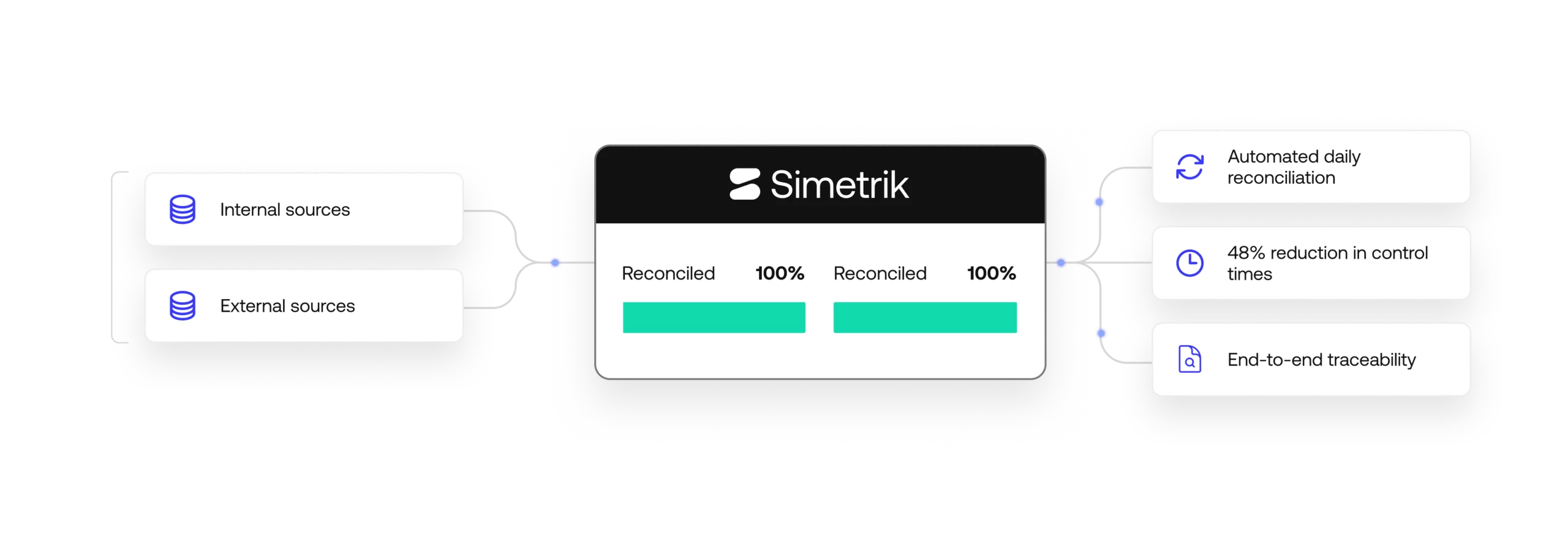
Simetrik automated MOVii’s end-to-end transaction reconciliation, centralized data sources from Colombia, Peru and Moviired, and empowered the operations team to configure business rules without depending on engineering, including a reengineering of the acquiring model.
How the solution was structured
To sustain 58x growth across 200M+ monthly transactions, 4 control domains were implemented: from fund inflows to automated accounting, with end-to-end traceability.
Cash In
Payments and rejects reconciliation
Automated validation of deposits, top-ups and payments against internal and external sources, with real-time rejection detection.
Cash Out
Financial settlements to partners
Validation of partner payouts under D+1 model, ensuring each outflow matches the funds actually transferred.
Claims & Chargebacks
Transactional chargebacks control
Automated cross-check of each chargeback against the original transaction, verifying existence, amount and settlement status.
Accounting Automation
Accounting cycle automation
Reconciliation outputs feed accounting processes, reducing manual journal entries and strengthening data governance.