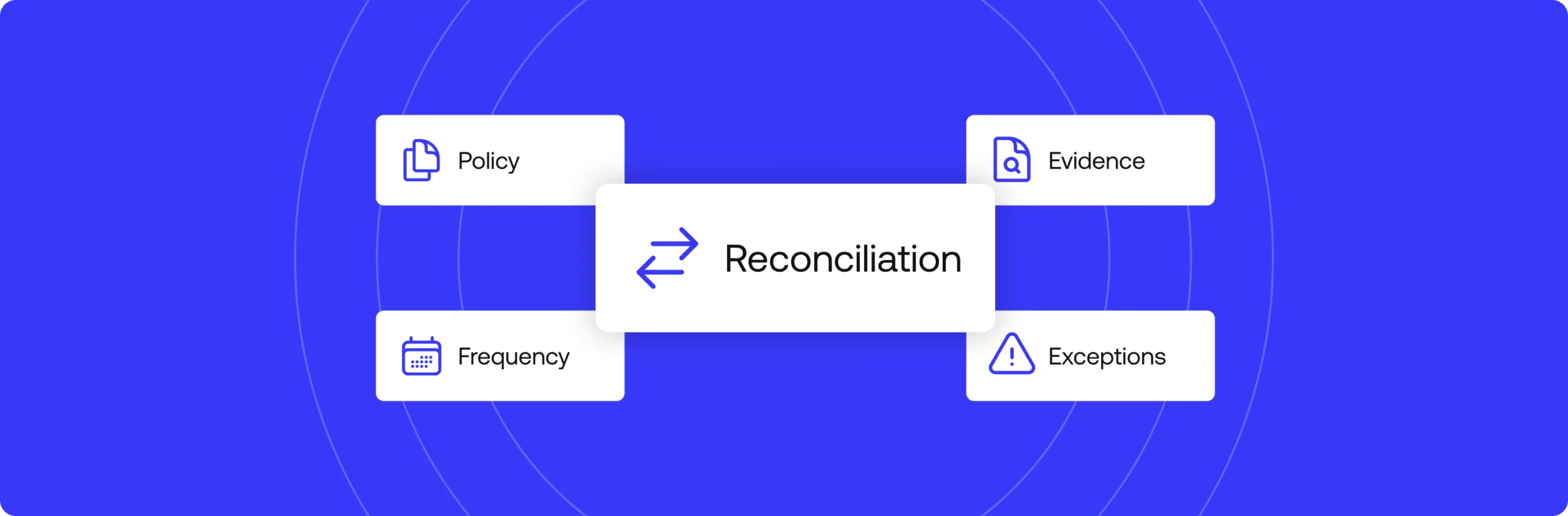
Account reconciliation best practices fall into four areas: policy (who owns what, and which accounts get reconciled), evidence (what backs up each balance), frequency (how often), and exceptions (what happens when something doesn’t match). Skip any one of the four and the process tends to break down somewhere, usually at month-end, when there’s no time left to fix it.
Some teams describe this as data reconciliation best practices in general, since the mechanics of matching one data set against another look similar across finance, operations, and IT. The scope here is narrower: financial account balances specifically, the ones that feed a balance sheet, an income statement, or a regulatory filing, where an unresolved gap has a dollar amount and an owner attached to it. The four categories below apply to every account type a finance team is responsible for, from a simple bank account to a multi-entity intercompany ledger, and the difference between a process that scales and one that quietly falls behind usually comes down to how deliberately each of the four was designed.
This framework is written for controllers, staff accountants, and CFOs who already run some version of reconciliation and want to know where the gaps are, more than for someone reconciling an account for the first time. These reconciliation best practices cover the same ground a mature program has to cover eventually: who owns the process, what proves a balance is real, how often to check it, and what to do the moment something does not agree.
Why account reconciliation best practices matter for financial accuracy
Without consistent reconciliation, financial statements and financial reporting rest on numbers nobody has actually checked against a source. A controller can close the books on schedule and still be wrong, because closing on time and closing accurately are separate achievements, and only one of them shows up on a calendar.
That gap tends to surface as distorted cash flow visibility and shaky financial accuracy right when it matters most: at close, during an audit, or in front of a board. A CFO presenting quarterly results built on unreconciled balances is presenting an opinion dressed up as a fact, and the room usually finds out only when the numbers get challenged. The cost rarely shows up immediately. It builds quietly in accounts nobody is watching closely, until an audit, a bank covenant review, or a cash shortfall forces a reconstruction of months of activity under real time pressure.
There is also a compounding effect that makes early gaps expensive later. A discrepancy left unresolved in one period tends to carry into the next, since most reconciliation processes start from the prior period’s ending balance. A $12,000 gap that goes uninvestigated in January becomes the starting point for February’s reconciliation, which means February inherits January’s mistake before a single new transaction has been recorded. Financial accuracy, in that sense, is cumulative: a team recovers it one clean close at a time, or loses more of it every month it stays unaddressed.
Consider a mid-size marketplace running reconciliation manually across a handful of payment processors. A small, unexplained variance in one processor’s settlement account gets logged as “to investigate” in month one. By month four, three more unexplained variances have piled up in the same account, none of them individually large enough to trigger an escalation, but together they represent a meaningful percentage of that account’s balance. That is usually the moment an auditor, an investor, or a new finance hire asks the question the internal team had stopped asking months earlier: what actually backs this number.
Policy: define ownership, controls, and which accounts to reconcile
The first category is governance: who does what, and which account types are actually in scope. Treating this as a policy decision, rather than something each preparer figures out individually, is what makes the rest of the framework hold together. Without a written policy, reconciliation becomes a personal habit that survives only as long as the person who built it stays in the role.
A reconciliation policy answers three questions before a single transaction is matched: which accounts require reconciliation, who prepares each one, and who reviews it. Financial controls exist precisely to make those answers explicit and repeatable, instead of leaving them to whoever happens to be available at month-end. Without that written policy, two preparers working the same account type in different entities will often reach different conclusions about what counts as reconciled, simply because nobody ever wrote down the standard both of them were supposed to meet.
That is also where standardization enters the picture. A policy that treats every account, every entity, and every currency with the same template turns reconciliation into a repeatable operating procedure instead of a set of one-off exercises that a new hire has to reinvent from scratch. Standardization does not mean every account gets identical treatment regardless of risk. It means the method for deciding treatment, which accounts, which cadence, which evidence, is consistent across the organization, so a controller reviewing five subsidiaries is reading five versions of the same report rather than five unrelated ones.
Segregation of duties, internal controls, and reconciliation procedures
Segregation of duties, meaning the person who prepares a reconciliation is not the person who approves it, is the most basic internal control in this category, and the one most often missing on small teams. When the same person prepares and approves, an honest mistake and a deliberate one look identical on paper, since nobody with independent judgment ever looked at the work.
Documented reconciliation procedures are what turn that control into something durable. Instead of knowledge that lives in one person’s head, a written procedure spells out the source systems to pull from, the matching logic to apply, and the escalation path when something does not tie out. That documentation is what makes the process itself auditable, in addition to the numbers it produces. It is also the foundation for standardization: once a procedure is written down for one entity or one account type, it can be applied consistently across every other entity and account type a company operates, rather than reinvented locally in each business unit. A controller overseeing five subsidiaries benefits far more from one standardized procedure applied five times than from five different procedures that happen to produce similar-looking output.
In practice, this often starts small. A finance team of three people might rotate who prepares which reconciliation each month, with a second person always reviewing before it is marked complete, even when that second person has a full plate of their own work. It is a modest control compared to a full approval workflow, but it is the difference between an error being caught in the same month it happened and an error surviving three closes before anyone notices the pattern.
Which accounts need reconciliation: bank, AP, AR, and balance sheet
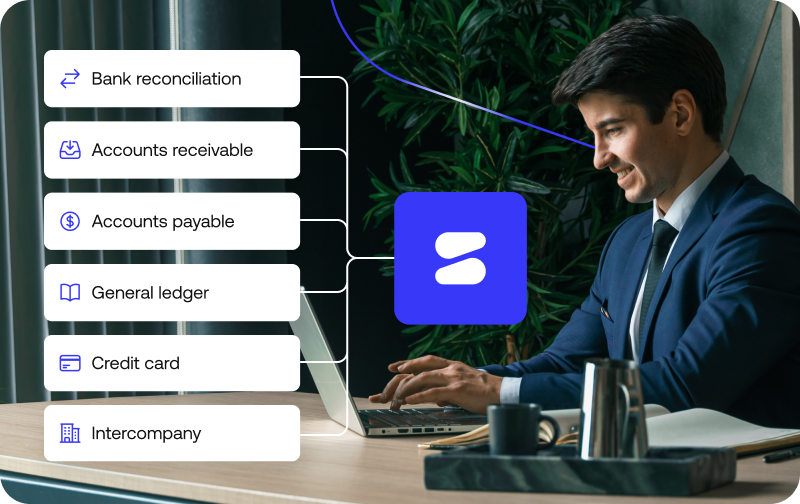
Bank reconciliation is the obvious starting point, and it is usually the first entry point into a broader bank reconciliation best practices discussion inside a finance team. But accounts payable reconciliation and accounts receivable reconciliation close the cash cycle from the other two sides, matching what the company owes and what it is owed against the subledgers that track each vendor and customer relationship. Balance sheet reconciliation, taken together, is the proof that every figure on the balance sheet has real support behind it. A balance that simply looks reasonable at a glance has not cleared that bar.
Solid balance sheet reconciliation best practices treat every one of these account types the same way: nothing gets marked complete without a verified source behind it, regardless of whether that source is a bank statement, a vendor invoice, or a customer contract.
This is where balance sheet account reconciliation best practices tend to diverge sharply between mature and immature finance functions. A mature function reconciles every material balance sheet account on a defined cadence, with a named owner and a documented procedure. An immature one reconciles the accounts that are easy to check, like the operating bank account, and leaves the harder ones, like accrued liabilities or deferred revenue, to be revisited only when an auditor asks a pointed question. The CFO is usually the one who feels the consequence of that gap first, since it is the CFO’s signature that goes on the certified financial statements, even when the underlying reconciliation work sat with a controller or a staff accountant several layers below.
Simetrik, for example, sets up configurable workflows and control monitoring by account type, so a bank account, an AP subledger, and a balance sheet accrual can each follow their own matching logic and review cadence without living in three unrelated spreadsheets.
General ledger, intercompany, fixed assets, prepaid, and credit card accounts
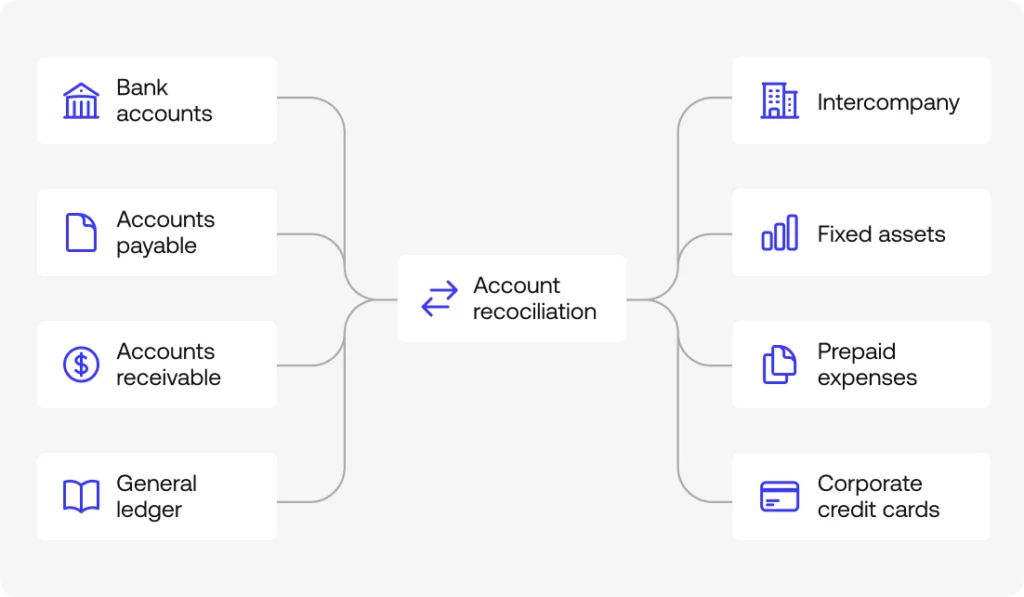
General ledger reconciliation is the accounting backbone, since every other reconciliation in this list eventually rolls up into it. Intercompany reconciliation, meaning accounts between entities in the same group, tends to be where differences go unresolved longest, mostly because a discrepancy between two internal entities rarely triggers the same urgency as a discrepancy against an external bank. Both sides can point at the other and assume it will get sorted out eventually, and eventually stretches into quarters.
Fixed assets, prepaid expenses, and credit card reconciliation round out the map. These are accounts that rarely get the same discipline as bank or AR, even though they distort the balance sheet just as easily when left unchecked. A prepaid expense schedule that is never reconciled against the underlying contracts will keep amortizing an expense long after the service it paid for has ended. A fixed asset register that is never checked against physical inventory will keep depreciating equipment that was scrapped two years earlier. Neither error is dramatic on its own, but both compound quietly across every reporting period until someone finally reconciles the account and has to explain the gap.
Intercompany accounts deserve particular attention in any company operating across more than one country or legal entity. A parent company invoicing a subsidiary for shared services, a subsidiary lending working capital to another subsidiary, or two entities splitting a shared vendor cost all create intercompany balances that have to match exactly on both sides of the entry. When they do not, the difference cannot simply be written off, since it usually represents a real timing gap, a currency translation issue, or a booking error on one side that has to be traced back to its source before consolidated financial statements can be trusted.
Evidence: what backs up every reconciled balance
No reconciliation is more reliable than the evidence behind it. A balance that matches on paper but has nothing backing it up is not reconciled, no matter how clean the spreadsheet looks. It is just two numbers that happen to agree, and numbers agree by coincidence more often than most finance teams would like to admit.
Evidence is also the category where a reconciliation earns the right to be trusted by someone who was not in the room when it was prepared, whether that is an external auditor, a new CFO reviewing the books for the first time, or a regulator asking for support six months after the fact.
General ledger, subledger, and bank or credit card statements
The general ledger and each subledger need to be checked against an outside source: the relevant bank statement or credit card statements. Without that cross-check, reconciling becomes comparing two internal numbers to each other, without ever validating either one against reality outside the company’s own systems. That is the core distinction that separates real general ledger reconciliation best practices from a cosmetic exercise: the outside source is what makes the comparison meaningful, since two internal systems can be consistently wrong with each other for years without anyone noticing.
A subledger, whether it tracks accounts receivable by customer or fixed assets by serial number, exists precisely so that the general ledger balance can be broken down into its component parts and checked line by line. When the subledger total does not match the general ledger control account, the difference has to be found before either number can be trusted, and that difference is usually where the real reconciliation work happens.
A common example: an accounts receivable subledger shows $840,000 owed across all open customer invoices, while the general ledger control account shows $845,000. The $5,000 gap could be a manual journal entry posted directly to the control account without a matching subledger update, a credit memo recorded in one system but not the other, or a customer payment applied to the wrong invoice. None of those explanations are visible from the two totals alone. They only surface once someone reconciles the detail underneath both numbers.
Source documents, vendor invoices, and journal entries
Source documents, meaning vendor invoices, receipts, and contracts, are what support every journal entry that adjusts an account. An adjustment with no document behind it is usually the first thing an auditor flags, and for good reason: a journal entry without support is a number someone typed in, with no way to confirm it reflects anything that actually happened.
This matters most for manual adjusting entries, the kind that correct an error, true up an estimate, or reclassify an amount between accounts. Each one should reference the source document or the calculation that justified it, filed in a way that someone outside the preparer’s head can find it later. A reconciliation that relies on memory for why an entry was made is one resignation letter away from becoming unauditable.
This is also where reconciliation procedures and evidence overlap directly. A documented procedure should specify how a match is made and what document justifies an adjustment when one is needed, so a new preparer joining the team knows exactly what to attach before an entry is considered complete, rather than learning it after an auditor sends the first request back unanswered.
Audit trail and financial records
An audit trail connects every reported figure back to where it came from, and organized financial records are what make it possible to reconstruct that chain months later, just as easily as on the day the adjustment was originally made. A well-kept audit trail means a controller can answer “where did this number come from” for any balance on the books, going back several periods, without having to reconstruct the answer from scratch.
Simetrik, for one, backs every reconciled item with a traceable, exportable audit trail, on top of the same configurable workflows and control monitoring described above, so the evidence behind a balance is available the moment someone, internal or external, asks for it.
Regulators and auditors both tend to ask the same underlying question in different words: can this number be traced. A company preparing for its first audit, or expanding into a jurisdiction with stricter reporting requirements, usually discovers how strong its financial records actually are only when someone outside the finance team starts pulling on that thread for the first time.
Frequency: how often to reconcile each account
Most account reconciliation guidance treats frequency as an afterthought, something that defaults to monthly because that is when the books close. Handled well, frequency is a risk-based decision, revisited account by account, rather than a single event that happens to line up with the calendar.
Month-end close and the accounting period
Most accounts get reconciled at the close of each accounting period, as part of month-end close. But treating frequency as a once-a-month event is exactly what turns the financial close process into a multi-day sprint under pressure, where every discrepancy discovered on day one competes for attention with every discrepancy discovered on day five, all against the same filing deadline.
A finance team that reconciles only at month-end is, in effect, choosing to discover every problem at the worst possible moment: right when the close timeline is tightest and the appetite for surprises is lowest. Spreading reconciliation work across the period, rather than compressing it into the days immediately after close, is less about working harder and more about not saving every hard problem for the same narrow window.
A finance team that reconciles its highest-volume accounts continuously through the month, rather than waiting for day one of close, effectively pre-solves most of its close-week problems before close week starts. What remains for the actual close period is the smaller set of items that genuinely could not be resolved earlier, which is a very different workload than reconciling everything from scratch under a filing deadline.
Risk-based frequency for high-risk accounts
High-risk accounts, meaning accounts with high volume, multiple sources, or a history of discrepancies, need a shorter cadence than monthly: weekly, or even daily. Reconciling everything on the same schedule, without weighing risk, wastes effort on low-risk accounts while high-risk ones go too long between checks.
A high-volume payment processing account with thousands of transactions a day and three different upstream data sources is a different risk profile than a low-activity intercompany loan account that changes twice a year. Applying the same monthly cadence to both means the payment account accumulates a month’s worth of undetected discrepancies before anyone looks, while the loan account gets checked far more often than its risk actually justifies. A risk-based frequency policy assigns cadence based on the account’s own risk profile rather than a fixed calendar habit.
Determining which accounts qualify as high-risk does not require guesswork. Transaction volume, the number of upstream data sources feeding the account, and a history of prior discrepancies are all observable, and together they make a reasonably objective case for which accounts need daily or weekly attention and which ones genuinely only need a monthly check.
Exceptions: handling discrepancies without losing control
The fourth category covers what happens when something does not match, and it is usually the one that separates a reconciliation process that scales from one that quietly falls behind. Policy, evidence, and frequency all exist to make exceptions visible quickly. What a team does once an exception surfaces is where the value of the first three categories is actually realized.
Timing differences vs. real discrepancies
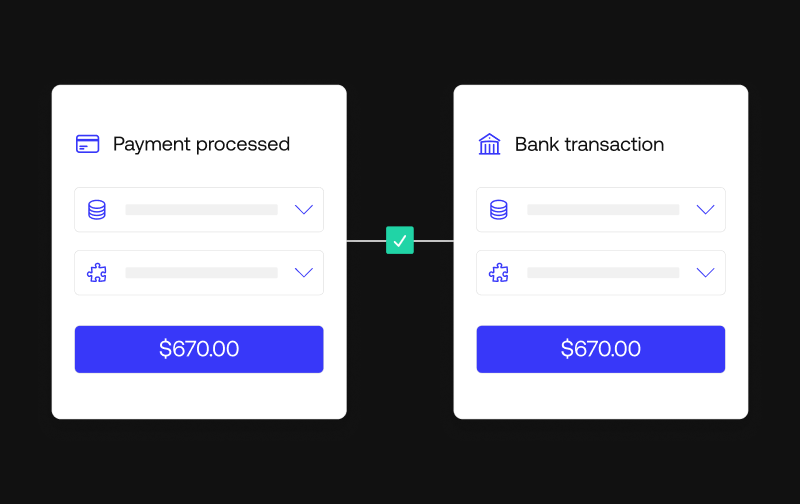
Most discrepancies are not errors. They are timing differences: deposits in transit, bank fees not yet recorded, checks that have not cleared. Those tend to resolve on their own in the next cycle, once the slower side of the transaction catches up to the faster one. The ones that timing does not explain are usually data entry errors, and those do need correcting, since they will not resolve themselves no matter how many cycles pass.
The practical skill here is distinguishing the two quickly, because treating a timing difference as an error wastes investigation time on something that was never broken, while treating a real error as a timing difference means it sits unresolved for another full cycle. A documented pattern of what “normal” timing differences look like for a given account, built up over several periods, is usually enough to make that call in minutes rather than hours.
A bank reconciliation showing three uncleared checks and one deposit in transit, all dated within the last five business days, matches a pattern any experienced preparer recognizes immediately. The same reconciliation showing an uncleared check dated four months ago is a different situation entirely, and deserves investigation rather than being carried forward as routine.
Fraudulent activity and fraudulent transactions
A smaller share of discrepancies are fraudulent activity or fraudulent transactions, and that possibility is one reason no reconciliation process should depend on a single person reviewing everything from memory. A pattern of exceptions that keeps showing up in the same account or the same period is the kind of signal a well-documented reconciliation surfaces quickly, well before it would show up in an annual audit sample.
Fraud in reconciliation rarely announces itself as a single dramatic transaction. It tends to look, at first glance, exactly like a timing difference or a data entry error, which is precisely why segregation of duties and a documented audit trail matter as much here as they do in the Policy and Evidence categories. The controller reviewing an exception report is often the first line of defense against exactly this kind of pattern going unnoticed for months.
This is one more reason frequency and evidence matter as much as segregation of duties in preventing fraud. A discrepancy reviewed weekly, with a clear source document required for every adjustment, gives a bad actor a much narrower window to operate in than a discrepancy that only gets a serious look once a quarter, based on a spreadsheet nobody outside the preparer’s team has ever opened.
Manual reconciliation vs. automation: where spreadsheets break down
Manual reconciliation in spreadsheets works fine while volume is low and the account list is short. A single entity with a handful of bank accounts and a small vendor list can run this process by hand indefinitely, and many companies do, successfully, for years.
The trouble starts as entities, currencies, or the number of high-risk accounts grow. Holding all four categories of the framework together by hand gets harder to sustain, and the underlying judgment involved is usually not the problem. The problem is that manual reconciliation stops scaling: doubling the number of entities does not double the manual effort required, it multiplies it, because every new entity brings its own bank formats, its own currency conversions, and its own set of intercompany relationships to track against every other entity already in the mix.
This is also where standardization pays off most visibly. A company that standardized its reconciliation procedure early, before volume forced the issue, can extend that same procedure to a new entity in days. A company that let each entity develop its own local process ends up needing a separate migration project every time it adds a new subsidiary, a new currency, or a new acquisition to reconcile.
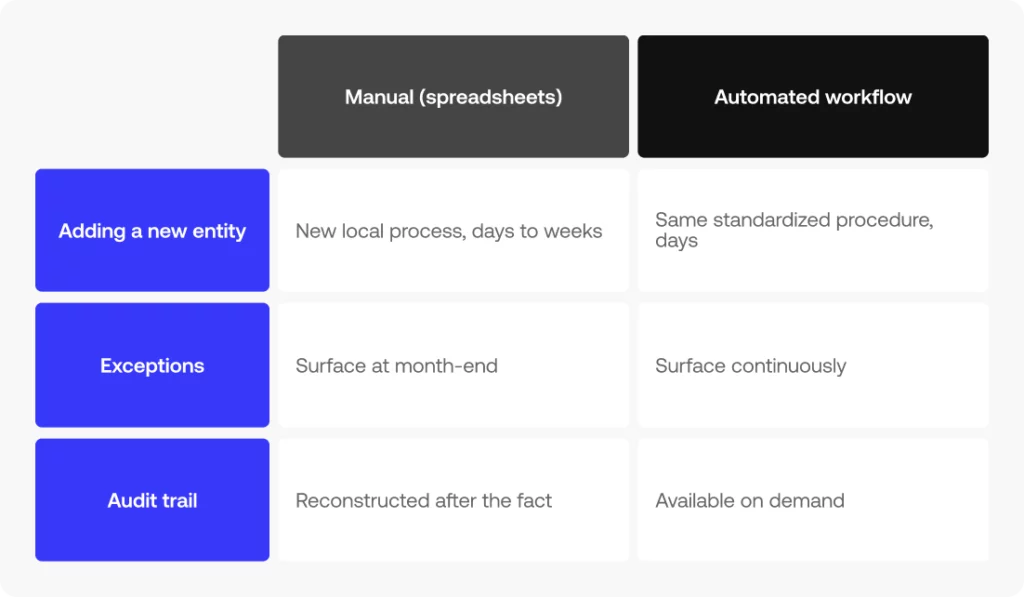
The tell: a manual process rarely fails with a single dramatic event. It is usually a slow accumulation of small signs: reconciliations that used to take an afternoon now take three days, a growing list of accounts that get reconciled “when there’s time” rather than on schedule, and a controller who can no longer describe, with confidence, exactly how many accounts are current and how many are behind. Spreadsheets do not announce that they have become the bottleneck. They just quietly stop keeping up.
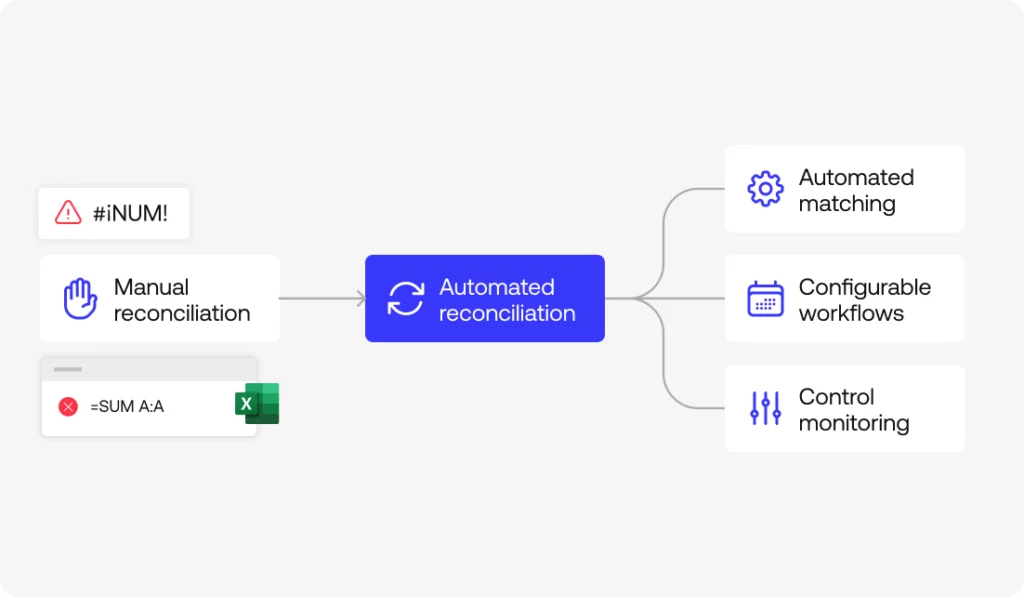
Automated reconciliation and modern accounting software exist to take over the repetitive part: matching, evidence gathering, and frequency scheduling, without removing human judgment from where it is actually needed, the real exceptions that timing differences and data entry errors do not explain.
Simetrik, as one example, automates the matching itself and leaves configurable workflows by account type and risk level, with centralized control monitoring, so the controller’s team spends its time on the exceptions that need a human decision rather than on re-checking thousands of transactions that already agree.
Quick-reference checklist: account reconciliation best practices at a glance
A condensed, copyable version of the four categories above, one line per practice, whether you are after a general account reconciliation best practices checklist or a narrower bank account reconciliation best practices routine for a single ledger:
- Policy: segregation of duties, documented reconciliation procedures, and a clear owner per account type.
- Evidence: every balance backed by a source document, a bank or credit card statement, a vendor invoice, or a journal entry, with an audit trail.
- Frequency: month-end for standard accounts, weekly or daily for high-risk accounts.
- Exceptions: timing differences resolved on schedule; anything else investigated and documented before the books close.
Account reconciliation best practices FAQs
What is the most important best practice in account reconciliation?
Segregation of duties is usually cited as the foundational one: without it, the other three, evidence, frequency, and exceptions, end up depending on one person’s judgment with no independent check on it. A controller can design an excellent procedure and still have it undermined if the same person who prepares a reconciliation is also the one who signs off on it, since every other practice in this framework assumes that a second, independent set of eyes will eventually review the work.
How many accounts should a company reconcile?
Every account that feeds the balance sheet, in principle: bank, AP, AR, GL, intercompany, fixed assets, prepaid expenses, and credit card accounts. Frequency, rather than whether to reconcile, is what should vary by risk. A small, low-activity account still belongs on the reconciliation calendar; it simply belongs there less often than a high-volume one. Leaving an account off the calendar entirely, rather than assigning it a lower-risk cadence, is usually how a small balance turns into a surprise finding two years later.
What’s the difference between account reconciliation and bank reconciliation?
Bank reconciliation is one type of account reconciliation, focused specifically on matching the cash book against the bank statement. Account reconciliation is the broader practice applied to every balance sheet account, cash included, which is why bank reconciliation best practices are best understood as a subset of a much larger discipline rather than a synonym for it.
H3: Who should be responsible for account reconciliation?
Ownership should sit with someone other than whoever approves the reconciliation, and that separation, segregation of duties, is the control itself, regardless of company size. In practice, a staff accountant or controller typically prepares the reconciliation, while a controller or CFO, depending on the size of the finance team, reviews and approves it. On very small teams where the same two or three people wear every hat, the separation can be as simple as one person always reviewing another’s work before it is marked complete, even without a formal title change.
Next step: put these best practices into a configurable workflow
These four categories work about as well on a spreadsheet as on a platform. The difference is how much of policy, evidence, frequency, and exceptions holds up on its own, without someone reviewing it by hand every month. That difference is what automated reconciliation actually buys a finance team: the manual re-checking that judgment never needed in the first place disappears, while the judgment itself stays exactly where it was. See how configurable workflows and control monitoring support these account reconciliation best practices in practice.
See how configurable workflows and control monitoring support this framework