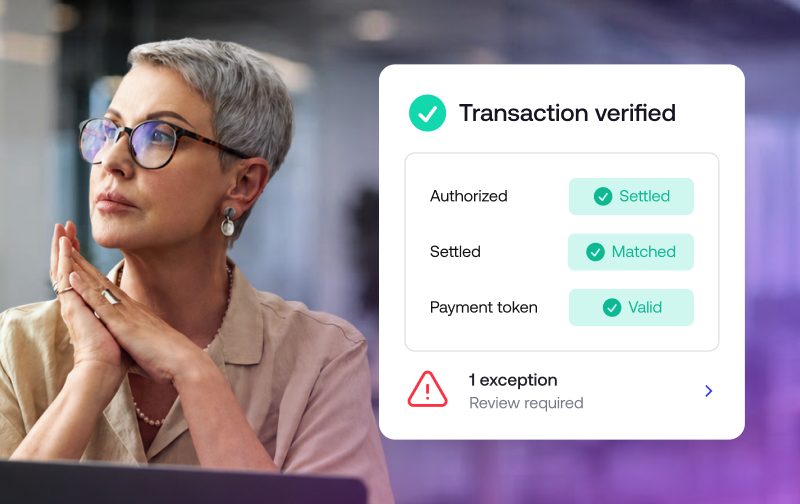
On Friday, November 27, Black Friday once again puts the financial control of retailers and marketplaces across the region to the test. In just a few days, sales pour in through dozens of payment methods, with promotions and fees that change from one campaign to the next, and every one of those transactions has to settle correctly and reach the books with the right amount.
The work doesn’t end when the deals do. The volume brings more fraud attempts and a wave of chargebacks and disputes that often only surfaces in the first quarter.
This year, purchases driven by artificial intelligence agents are also growing: Adobe projects that traffic reaching US retail sites from AI tools will rise 130% this season.
With all of that at stake, the question for any finance team is whether it can prove, transaction by transaction, that every sale of the season reached the right account with the agreed fee.
The size of the peak: how much volume multiplies
Projections point to another record season in Latin America. In Brazil, Neotrust estimates that e-commerce will generate R$13.3 billion in revenue between November 26 and 29, 20.7% more than in 2025. Behind that growth lies a nuance that matters for anyone reconciling: between January and September, online orders in the country rose 34.9% while revenue grew 16.9%, because the average ticket fell 13.4%, according to Neotrust data cited by InfoMoney. More lower-value orders mean more records to reconcile for every sale.
In Mexico, El Buen Fin 2025 recorded 59 million transactions, with e-commerce growing 31%. Across the region, Visa reported, based on preliminary data, a 15% increase in spending on its cards during Black Friday week 2025.
The United States, the largest market, serves as a benchmark for sizing the peak. There, Black Friday kicks off Cyber Week, the five days from Thanksgiving to Cyber Monday. Adobe projects US$12.9 billion online on Friday the 27th alone, US$47.5 billion over the full week and US$275.1 billion for the November and December season, 6.7% more than in 2025.
The calendar is stretching, too. Adobe expects US$95.8 billion in online sales during October, 8% more than last year, and in 2025 Stripe had already detected above-average volume from about ten days before Black Friday through December 19. With several weeks of high volume, automating control becomes more urgent, because whatever isn’t reconciled in time piles up from one day to the next.
Retailers and marketplaces: where reconciliation breaks down
On top of volume comes variability, which is usually the hardest part to control because new sources appear and business rules change with every campaign. The problems concentrate on these fronts:
- Returns and refunds: Salesforce calculated that 14% of online purchases in the 2025 season were returned, worth US$181 billion, and the NRF estimated an even higher rate of 19.3%.
- Fraud and chargebacks: Stripe measured fraud at close to 1.4% of volume over the Black Friday 2025 long weekend, 1.7 times the level of a normal period, and in Latin America, Visa blocked around 185% more suspicious transactions than in 2024.
- Multiple payment methods: cards, instant transfers, wallets and BNPL coexist within the same campaign, and each rail settles on its own timelines and formats. In the United States alone, Adobe projects US$21.3 billion in online BNPL purchases between November and December 2026.
- Installments and interest-free months: depending on the country and the agreement with the acquirer, the merchant may receive the money as each installment comes due or collect the full amount upfront at a financial cost. Either way, open items and fees remain to be validated.
- Temporary promotions and fees: when discounts, co-funded coupons and special PSP or acquirer rates change by campaign, validating the theoretical cost against what was actually charged becomes critical.
- Marketplaces: seller payouts are calculated on discounted prices, while GMV-based commissions, logistics and returns adjust the balances of thousands of sellers at the same time.
Disputes concentrate in the first quarter, when consumers review their card statements. What sells in November is settled, returned, disputed and closed in the books between December and March, so the financial risk of Black Friday lasts well beyond the weekend.
2026: agentic commerce reaches the checkout
Salesforce estimates that AI and agents influenced 20% of global Cyber Week 2025 orders, worth US$67 billion, and projects that 20% of e-commerce traffic in the 2026 season will come from AI agents. Adobe, in turn, expects traffic from AI tools to US retail sites to grow 95% on Black Friday alone. These are different measurements, of influence and of traffic, and there is still no market-wide figure for purchases completed by agents, but they all show rapid growth.
The shift from recommendation to purchase is already underway. Visa Intelligent Commerce, Mastercard Agent Pay (with Agentic Tokens and Verifiable Intent) and protocols such as Stripe and OpenAI’s ACP allow an agent to complete the payment, and Visa has forecast that millions of consumers will use AI agents to complete their purchases this season. In Latin America and the Caribbean, the company said it is working to get the region’s leading merchants ready to accept agent-made purchases during 2026.
For reconciliation, that growth adds complexity in several ways:
- The transaction carries new data, such as the agent’s identity, the token’s scope or consent limits, which today doesn’t always travel through to the settlement report or the ERP.
- An agent can transact with several providers in minutes, and exceptions pile up at machine speed.
- The chain adds a new intermediary, and remittance data arrives thinner.
- New dispute questions arise, such as who is responsible if the agent bought something the consumer didn’t want, and with them more “I don’t recognize this purchase” chargebacks backed by a different kind of evidence.
An authorized payment shows that the agent was allowed to spend. To know whether the money moved as it should, that data has to reach settlement and the general ledger, which is where reconciliation comes in.
The season’s financial control challenges
Against this backdrop, the season tests financial control on several fronts at once. On the incoming side, every sale has to be confirmed as settled in full and on time, even when it arrives in parts from multiple PSPs, acquirers and wallets. On the outgoing side, seller payouts and post-peak refunds have to be validated before they are executed to avoid duplicate or incorrect payments, and every fee or promotional rate must match what was agreed.
Chargebacks require gathering evidence within deadlines and watching ratios against network thresholds, including the new disputes over agent purchases. In accounting, provisions for returns and chargebacks and the November and December closes come with unusual volume, and the year-end audit calls for reports that can be traced back to the originating transaction. While the peak is underway, the team also needs to detect anomalies in time to act.
As AI-Native financial control infrastructure, at Simetrik we address each of these challenges with eight control domains:
| Season challenge | Simetrik domain |
| Confirm that every sale settled in full and on time | Cash In |
| Validate payouts and refunds before executing them | Cash Out |
| Verify fees and promotional rates against what was agreed | Fees & Billing |
| Manage chargeback evidence, deadlines and ratios | Claims & Chargebacks |
| Record provisions with journal entries generated from reconciled data | Accounting Automation |
| Close November and December with integrity between operations and accounting | Accounting Operations |
| Reach the audit with reports traceable to the originating transaction | Reporting & Regulations |
| Detect anomalies while the peak is underway | Unified Oversight & Alerts |
Learn more about each of Simetrik’s domains.
Checklist: how to prepare before, during and after
- Before: inventory the sources and formats that will be involved (PSPs, acquirers, banks, wallets and BNPL), identify which sources already report agent-initiated transactions and which don’t yet, load the agreed rates and promotions into the control and define alert thresholds.
- During: make sure reconciliation is automated and runs continuously throughout the season, and monitor approval, fraud and chargeback rates against network thresholds, along with the consolidated cash position.
- After: the November close comes just three days after Black Friday, and the deals week ends on November 30 itself, so the priority is to confirm settlements on time, including installments, and validate seller payouts. Next comes provisioning for returns and chargebacks and reaching the December close with reconciled, traceable data for the audit.
The season is won in sales but protected with control, and that means reconciling continuously and at the transaction level to reach the close and the audit with evidence for every figure.
Simetrik is an AI-Native financial control infrastructure. More than 180 leading companies in over 50 countries trust Simetrik to process 2.5 billion records a day, reduce losses and accelerate growth.
If you want to head into this season with control in place, request a demo.