Artificial intelligence, generative AI, machine learning, agentic AI: the labels pile up faster than most finance teams can evaluate what any of them actually do for their books. Search interest in “AI accounting” has climbed hard over the past year, and for good reason. The opportunity is real. It’s just not evenly spread, and it doesn’t look the same in every part of the finance function.
This is a category map, not a hype piece: where AI is genuinely changing accounting work today, category by category, and where a platform like Simetrik fits into that picture.
What’s Actually Changing in Accounting Teams
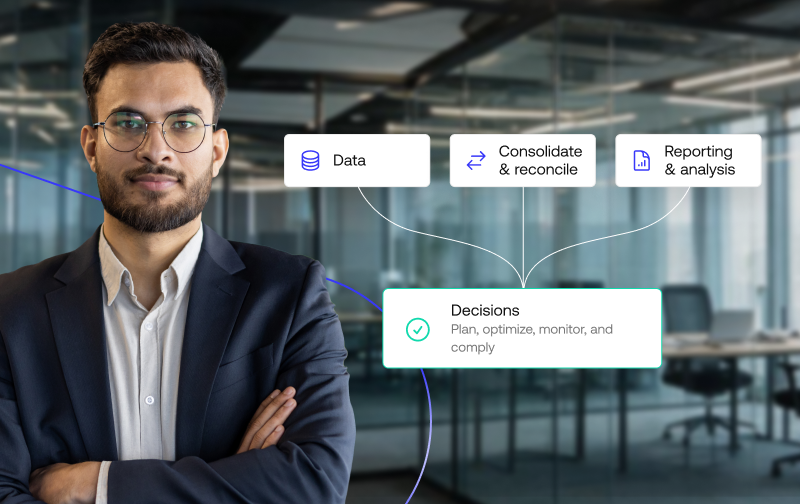
The shift isn’t accounting teams being replaced by AI agents. Its accounting teams increasingly supervising AI agents that handle the first pass on repetitive work, categorizing transactions, drafting entries, matching records, so people spend more time on judgment calls and exceptions and less on data entry. Workflow automation that automates an entire process end to end is still rare. Automating the first 80% of a workflow and routing the rest for review is where most of today’s real adoption sits, and it’s usually described less as one big leap and more as teams learning to automate workflows piece by piece.
Bookkeeping and the General Ledger
AI-native bookkeeping tools now pair automated categorization with human review, aimed at startups that want hands-off books without giving up oversight. At the same time, mainstream small-business accounting platforms have been layering AI-assisted categorization and reconciliation suggestions directly into their existing general ledgers rather than requiring a separate tool.
Accounts Payable, Bill Pay, and Corporate Cards
Purpose-built AP tools now read invoices, code them, match them to purchase orders, and route approvals automatically, aimed at mid-market and enterprise teams processing high invoice counts. Spend-management and corporate-card platforms are approaching the same problem from the other direction, pairing spend controls with AI-assisted invoice processing and bill pay.
Accounts Receivable
Accounts receivable has seen less AI investment than AP so far, but the same shape of automation is starting to show up: matching incoming payments to open invoices, flagging partial payments, and automating collection follow-ups, reducing the manual cash application work that used to eat up a meaningful chunk of the AR function’s time.
Month-End Close, Reconciliation, and Financial Reporting
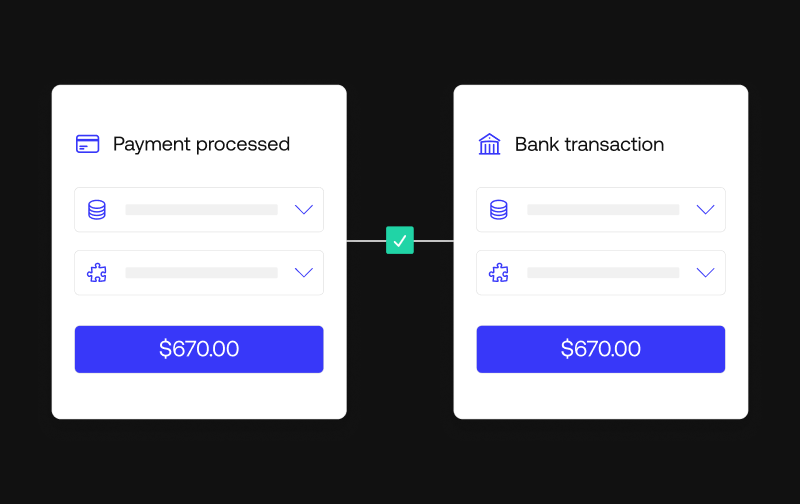
This is where the stakes are highest, and where the guardrails matter most. Reconciliation and close involve matching transaction data across multiple systems (a bank, a processor, an ERP, a general ledger), flagging what doesn’t match, and producing an audit trail that holds up months later. Anomaly detection helps flag the exceptions worth a human’s attention. Traceability is what makes the result defensible to an auditor.
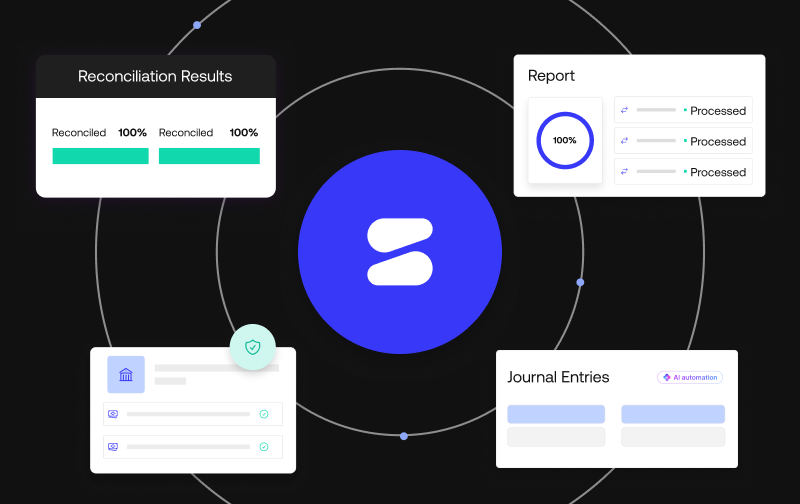
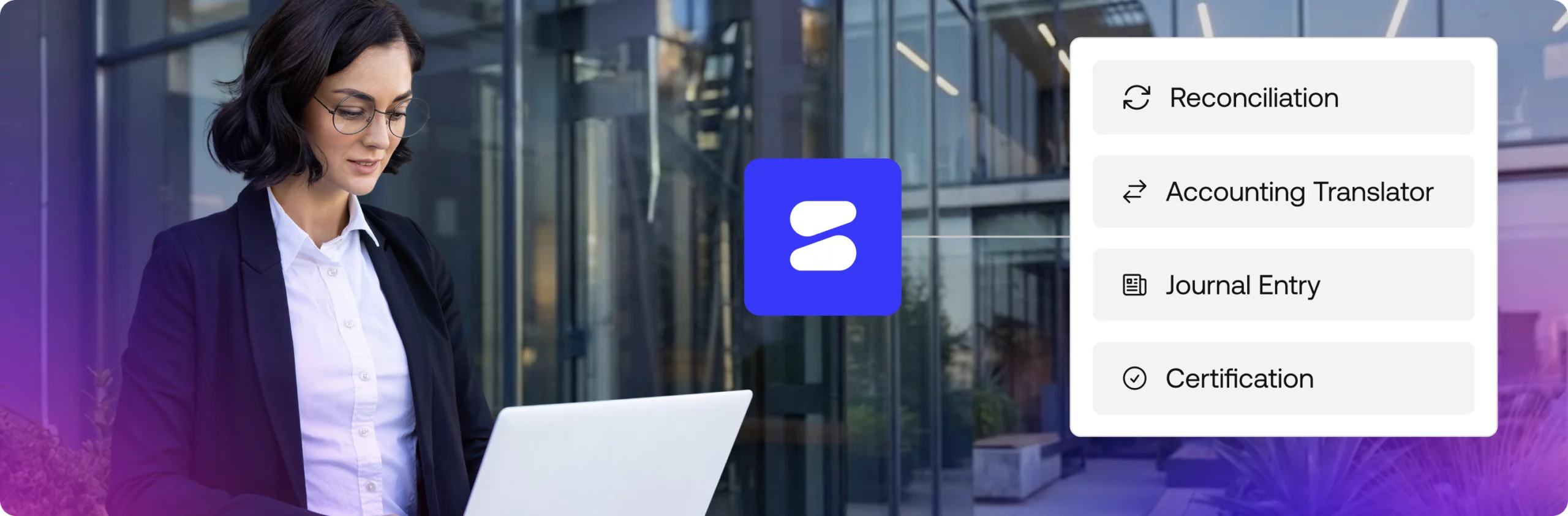
Simetrik operates in exactly this category, built around continuous close rather than a periodic scramble at month-end. A deterministic matching core reconciles transaction-level data continuously, across banks, processors, and internal systems, throughout the month, not just at cutoff. From there, Simetrik’s Accounting Translator turns reconciled data into journal entries and posts them directly into the customer’s ERP, while a structured account reconciliation workflow lets preparers and certifiers compare ERP balances against evidence, document a justification for every variance, and certify each account for the period, with a full audit trail. The result is a close that happens continuously across the month instead of a scramble compressed into a few days at the end of it. See our Simetrik alternatives guide for how this category compares to building in-house, spreadsheets, or general AI tools.
Lease Accounting and Compliance-Heavy Workflows
A newer wave of tools applies AI specifically to lease accounting and revenue recognition compliance, ASC 842 and IFRS 16 in particular, extracting data from contracts and source documents and connecting it to audit trails that link every recognized number back to its source. It’s a good example of AI being applied to a narrow, compliance-heavy workflow rather than the general ledger broadly.
Forecasting, Budgeting, and Predictive Analytics
Forecasting and budgeting tools increasingly pull from ERP and CRM data together, using predictive analytics to project cash flow, revenue, and budget variance rather than relying on a static annual model. The same shift is showing up in wealth management and financial advisory work, where AI-assisted analysis is being used to support (not replace) the judgment a financial advisor brings to a client relationship.
The General-Purpose Layer: LLMs in Finance Work
Alongside all of the above, general-purpose large language models have become a legitimate part of the accounting toolkit for research, memo drafting, and ad hoc data analysis. None of them are built to execute a financial control on their own, and shouldn’t be asked to. Where they add real value is helping a person move faster through analysis and documentation that used to take longer to draft from scratch.
The AI-in-Accounting Landscape at a Glance
| Category | What AI Actually Does There |
|---|---|
| Bookkeeping & GL | Categorizes transactions, drafts journal entries, flags anomalies for review |
| AP, Bill Pay & Cards | Reads invoices, codes and matches them to POs, routes approvals |
| Continuous Transaction Matching | Matches transaction-level data continuously across banks, processors, and internal systems, then posts reconciled data into the ERP as journal entries via the Accounting Translator |
| Financial Close & Certification | Consolidates and certifies reconciled ERP data at period-end: balance sign-off, variance justification, audit trail |
| Lease & Compliance | Extracts data from contracts, automates ASC 842 / IFRS 16 workflows |
| Forecasting & FP&A | Builds predictive models from ERP and CRM data for budgeting and cash forecasts |
| General-purpose LLMs | Research, memo drafting, and ad hoc data analysis across finance workflows |
Where Simetrik Fits in the AI Accounting Landscape
Simetrik is built for this category end to end: continuous transaction matching, journal entry automation through the Accounting Translator, and account reconciliation and certification through to period close. A deterministic matching core reconciles data daily across banks, processors, and internal systems. The Accounting Translator carries that reconciled data through to journal entries in the ERP, and a structured certification workflow, preparer and certifier sign-off, evidence attachment, and variance justification, closes each account for the period with a full audit trail.
An AI layer supports natural-language configuration, pattern detection, and exception review, without letting a probabilistic model make the final call on a financial control. The result is a close that runs continuously through the month rather than a scramble compressed into the final few days. It’s designed for high-volume, high-complexity transactional environments, fintechs, payment processors, marketplaces, where reconciling data across many sources is the daily reality, not an edge case.
Simetrik at Money20/20 USA 2026
Money20/20 USA runs October 18–21, 2026, in Las Vegas, bringing together the global payments and fintech ecosystem to talk about what’s next. Book a meeting
See Simetrik’s AI Layer in Action
If reconciliation and close are where your team is still doing the most manual work, see how Simetrik’s deterministic core and AI-assisted configuration handle it at scale.
Frequently Asked Questions About AI in Accounting
What is AI accounting?
AI accounting refers to using machine learning and generative AI to automate accounting tasks, transaction categorization, invoice coding, reconciliation, anomaly detection, and reporting, that traditionally required manual data entry and review.
Will AI replace accountants?
The current pattern is AI handling first-pass, repetitive work while people supervise exceptions and make the final judgment calls, not full replacement. Financial controls in particular still require a human decision on anything a deterministic system can’t resolve automatically.
What’s the difference between AI accounting software and agentic AI?
AI accounting software typically uses machine learning for specific tasks like categorization or anomaly detection. Agentic AI goes further, taking multi-step actions toward a goal, like an AP agent that reads an invoice, matches it to a PO, and routes it for approval without a person initiating each step.
Can general AI tools like ChatGPT or Claude replace dedicated accounting software?
No. General-purpose LLMs are useful for research, drafting, and analysis, but they aren’t built to execute reproducible financial controls. A reconciliation or close process needs a deterministic system that produces the same result from the same inputs every time, which is a different architecture than a conversational AI model.
Where does reconciliation fit in the AI-in-accounting landscape?
Reconciliation and financial close are related but distinct steps: continuous transaction-level matching throughout the month, followed by account-level certification and sign-off at period-end. Simetrik covers both, so certification at close works from data that’s already been reconciled, not from scratch.