When companies scale quickly, the first cracks often appear in back-office processes. Reconciliation is usually the most visible and the most painful.
Teams start each morning inside spreadsheets, pulling CSVs from processors, painstakingly matching transactions, and hoping the numbers line up. Manual workarounds may be sufficient at a small scale, but they turn into structural risk as volumes and partners multiply.
For a fast-growing fintech, reconciliation at scale means comparing transaction-level records across a growing number of processors, banks, ledgers, and partners without losing control of exceptions.
The operating model is straightforward: centralize the source data, normalize it, apply deterministic matching rules, and send the remaining exceptions to analysts with the context they need to act.
This is a familiar story: multiple bank and processor accounts, dozens of payment stakeholders, hundreds of thousands of daily entries, and activity spread across many time zones all contribute to a level of complexity that is hard to rein in.
At scale, reconciliation must work for everyone. Finance leadership needs speed and reliability, while operations wants transparency and control.
Both teams need one source of truth. This article explains the problems behind manual reconciliation and how a controlled, automation-first approach can turn daily firefighting into a durable operating model.
The cost of spreadsheet-driven reconciliation
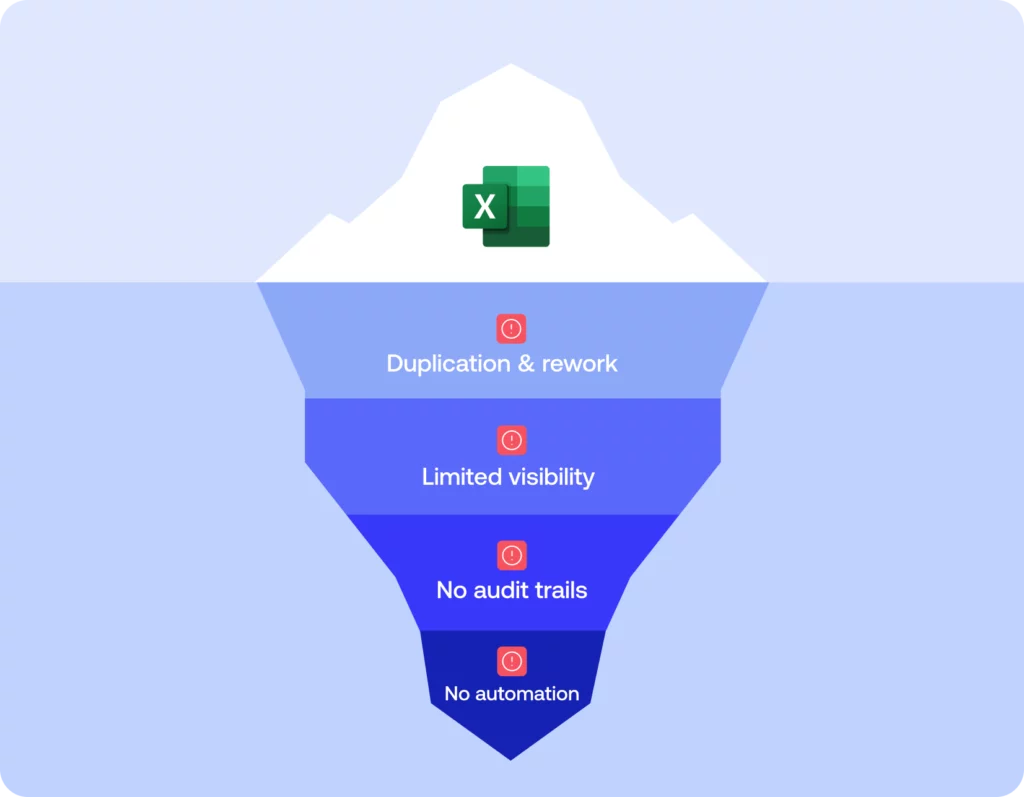
Spreadsheets are flexible and fast at the start. At scale, however, they create hidden costs that compound daily.
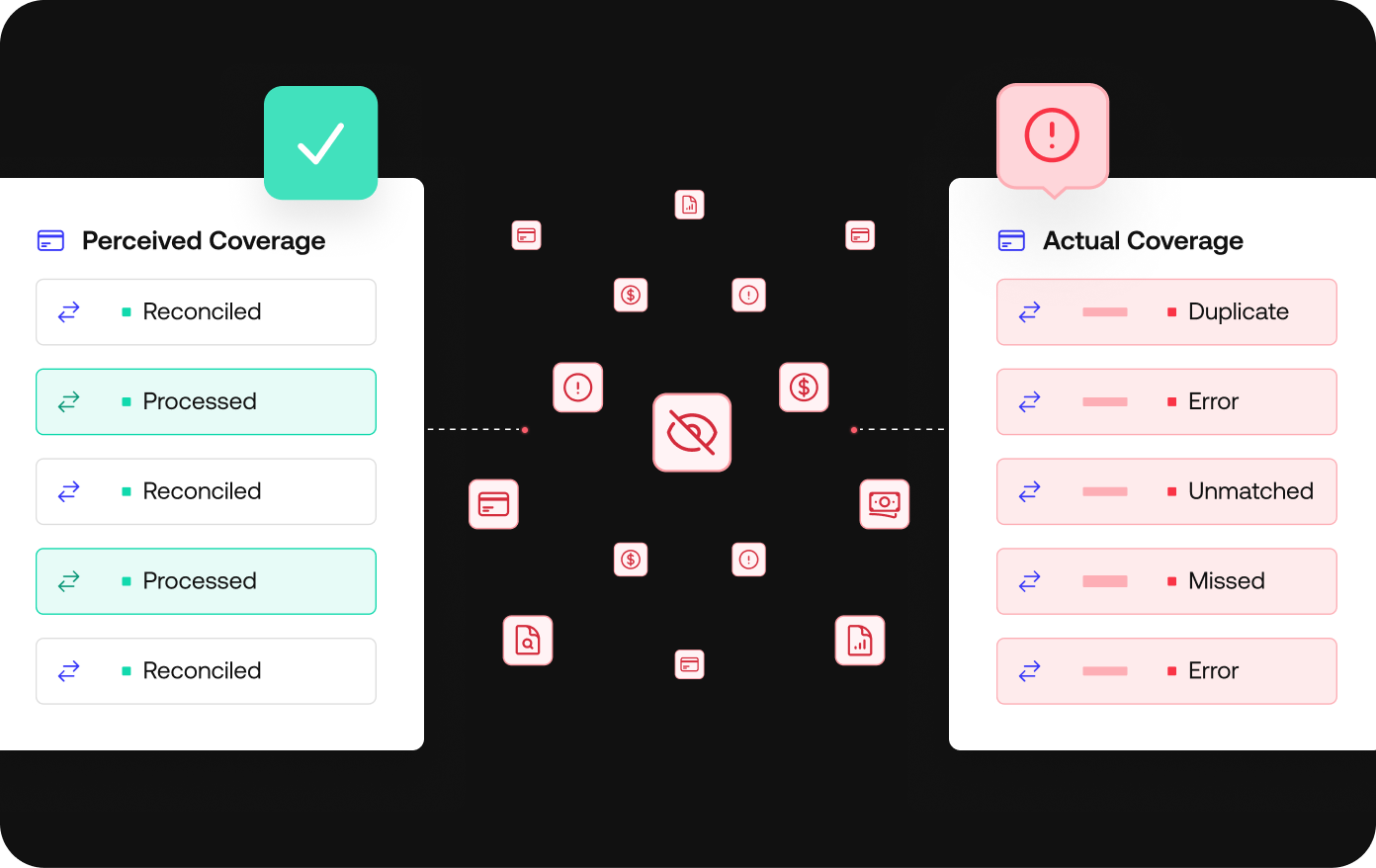
Instead of one controlled view of transaction and financial data, spreadsheets provide snapshots that diverge as teams copy, filter, and rework them. It becomes difficult to pinpoint what is reconciled, what is pending, and where material risk is concentrated. Context lives in people’s heads and scattered tabs.
In April 2025, the FDIC announced a $150 million civil penalty and a restitution plan of at least $1.225 billion against Discover Bank. A parallel Federal Reserve action imposed another $100 million penalty on Discover Financial Services and DFS Services.
Software would not have resolved the underlying conduct on its own. The case shows why teams need source-level records, controlled classification logic, reviewable changes, and evidence they can reconstruct when a fee or rule is challenged.
The cost of spreadsheet-driven reconciliation is due to several factors:
- Duplication and rework that wastes hours and adds risk
- Limited visibility that stunts leadership’s ability to make decisions
- Lack of clear, immutable audit trails needed for compliance
- Lack of automation, with experienced analysts reduced to data movers
These are not simply inconveniences. They are control failures waiting to surface. And the higher the transaction volumes, the worse these failures will be.
Why volume breaks spreadsheets and how to fix it
The largest PSPs and marketplaces process millions of transactions a day. At that scale, two things matter most. First, you must reconcile at the transaction level, not only by balance. Second, you must do it without forcing humans to wait on a screen.
A scalable workflow ingests compatible data from processors, banks, and internal systems, then normalizes files and APIs into comparable structures. Configured rules handle repeatable matching while analysts work from an exception queue instead of reviewing the full dataset.
A useful scale test compares the same control at ten thousand and ten million rows. Runtime should remain predictable, material open items should stay visible, and analysts should not have to wait on the full dataset or build intermediate spreadsheets to make the process work.
A transaction-level reconciliation platform supports this operating model by connecting data preparation, matching, exception handling, and traceability.
What modern reconciliation should deliver by default
A modern reconciliation platform should provide financial control from transaction record ingestion to traceable reporting, with visible rules, exceptions, owners, and evidence.
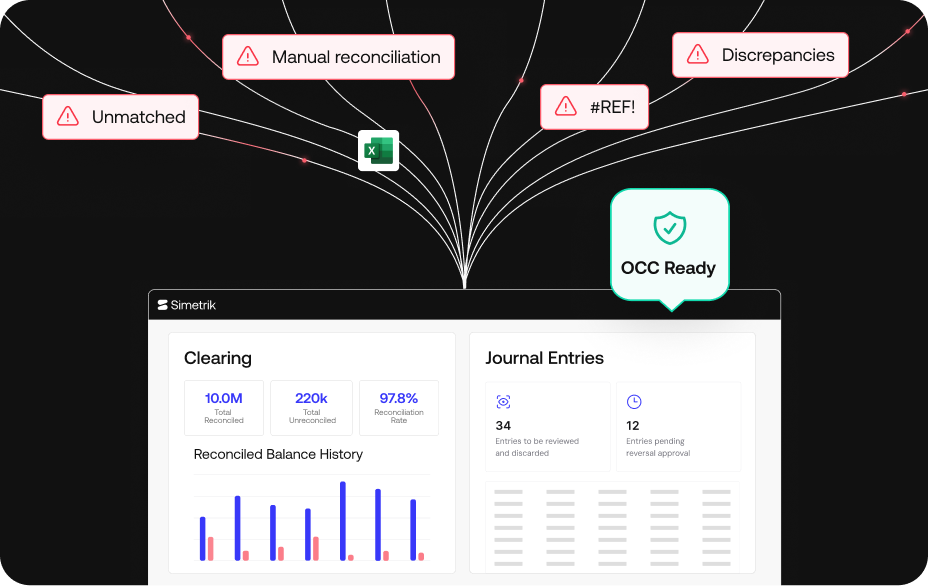
In practice, teams need one governed view of accounts, partners, processors, completed controls, pending exceptions, fees, and financial exposure. The dashboard should show both counts and values, because a small number of unresolved transactions can still be material.
A scalable model uses deterministic matching rules for control and AI to assist mapping, transformations, rule suggestions, and exception analysis. Finance and operations retain responsibility for the configuration, approvals, and material decisions.
When considering a modern reconciliation platform, check for these critical features:
- Configurable matching. Prioritized rules, tolerances, and matching sequences that compare prepared transaction data while retaining the rule behind each result.
- Scalable processing. Processing designed for growing data volumes, source counts, matching sequences, and recurring controls.
- Granular access control. Configurable profiles that give reconcilers, engineers, finance leaders, and other stakeholders appropriate access and visibility. Actions and changes remain traceable within the supported workflow.
- Collaboration across teams. Configured exception and oversight workflows can bring the right teams into the investigation while keeping evidence and status tied to the underlying record.
- A traceable audit trail. Source lineage, rule versions, actions, notes, approvals, timestamps, and user attribution that allow a reviewer to reconstruct the result.
- Controlled reporting and downstream workflows. Dashboards, datasets, exports, and compatible distribution workflows built from reconciled data and documented controls.
Together, these capabilities reduce repetitive work and make control evidence easier to review. They also reduce the engineering dependency created when every new partner, field, or rule requires a custom spreadsheet or code change.
How Simetrik aligns with your operational reality
Simetrik is a financial reconciliation and control platform for teams managing high-volume operations. It combines governed data preparation, configured matching rules, exception workflows, and traceable outputs. AI assists mapping, transformations, rule suggestions, and analysis while the deterministic engine executes the control logic.
Reconciled data can feed dashboards, reports, and compatible downstream workflows. The same governed output supports operations and finance without another round of spreadsheet assembly.
From data movers to investigators
By adopting an AI reconciliation platform, you allow analysts to take on a more impactful, strategic role. They can see discrepancies and exceptions in their dashboard, along with all the context they need to investigate and resolve the issue.
With Simetrik, exception views can include the fields needed for investigation: counterparty, flow type, currency, amount, references, prior attempts, and related items. Configured conditions can route ownership and notify support or payments teams when their input is needed.
Analysts spend their day resolving, not assembling. They close items, add root cause codes, and propose rule changes when patterns emerge. Managers see throughput, backlog age, and the value at risk by team and partner. Leadership gets a clear view of operational health and financial exposure, not a stack of spreadsheets.
Reporting that’s ready to share and act on
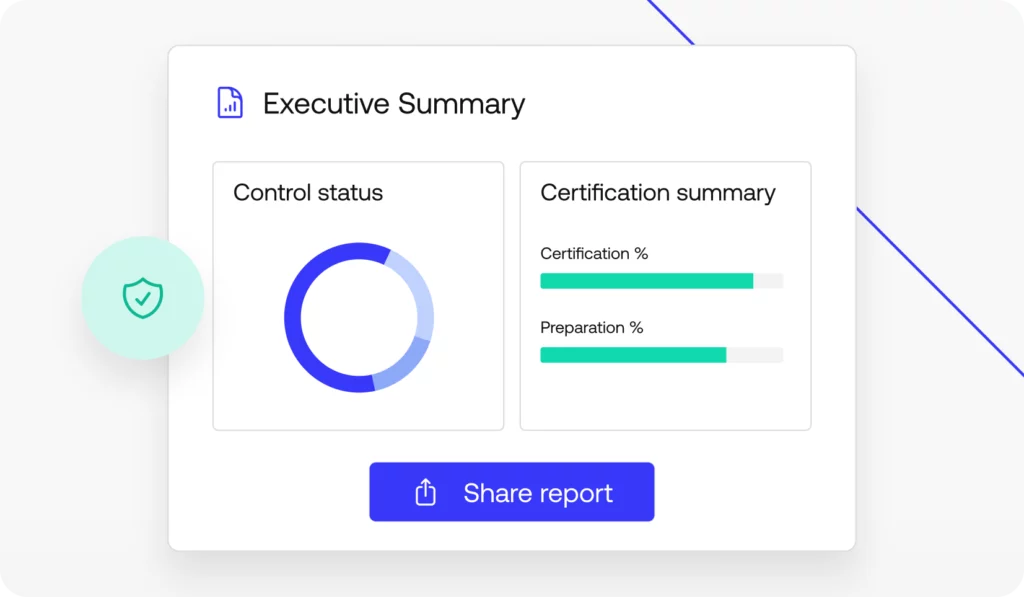
Many teams still struggle with reporting at the end of a period. Missing evidence, manual data collection, and incomplete source information delay review and force people to rebuild the same analysis.
Internal protocols and external reporting requirements add more preparation. Teams need documentation that reflects their own controls and can be traced back to the underlying records.
AI Copilot Datasets can help users create reusable queries or datasets from natural-language instructions, such as identifying which partners drive the most exceptions or which accounts close late. Teams review those outputs and use them in dashboards or reporting workflows configured for their own requirements.
Dashboards and reports can remain drillable to the underlying transactions. Finance gets the context it needs while operations avoids rebuilding the same pivot table at every period end.
Integrations that keep systems aligned
Fast-growing companies often implement accounting systems on a separate track from operations. Reconciliation then becomes a bridge between external movement and internal books. That bridge needs to be stable.
Through compatible integration methods, Simetrik can ingest financial and operational data from banks, processors, ledgers, data warehouses, and internal systems. Cleared positions or exception summaries can then move into supported downstream workflows.
If an ERP rollout is still underway, structured exports can bridge the current process while the team establishes more consistent data and traceability.
What the first 90 days look like
Teams often ask how to move from spreadsheets to a controlled operating model without disrupting the close. The following 90-day sequence is an evaluation framework, not a universal implementation promise.
| Period | Operating focus | Evidence to review |
|---|---|---|
| Weeks 1–4 | Connect the highest-volume processors and bank accounts. Recreate the current matching logic and begin working exceptions in Simetrik while spreadsheets remain a comparison point. | Source completeness, first match results, aged items, and an executive dashboard for the in-scope workflow. |
| Weeks 5–8 | Retire spreadsheet steps for the in-scope accounts. Add rule stages, configured ownership, notifications, notes, and reason codes. | Manual-touch rate, backlog age, ownership, and monthly reporting from the controlled workflow. |
| Weeks 9–12 | Expand to more accounts and partners. Tighten access profiles, add approvals for sensitive actions, and connect compatible downstream workflows. | Runtime, coverage, remaining gaps, user access, exports, and month-end readiness. |
The first month tests source readiness, matching coverage, and ownership. Later phases should prove that the workflow can expand without losing runtime visibility, traceability, or control.
Finding ROI: seeing fast outcomes on Simetrik
Use the first few reconciliation cycles to establish a baseline. Compare runtime, match coverage, unmatched value, backlog age, manual touches, and reporting effort before expanding the workflow.
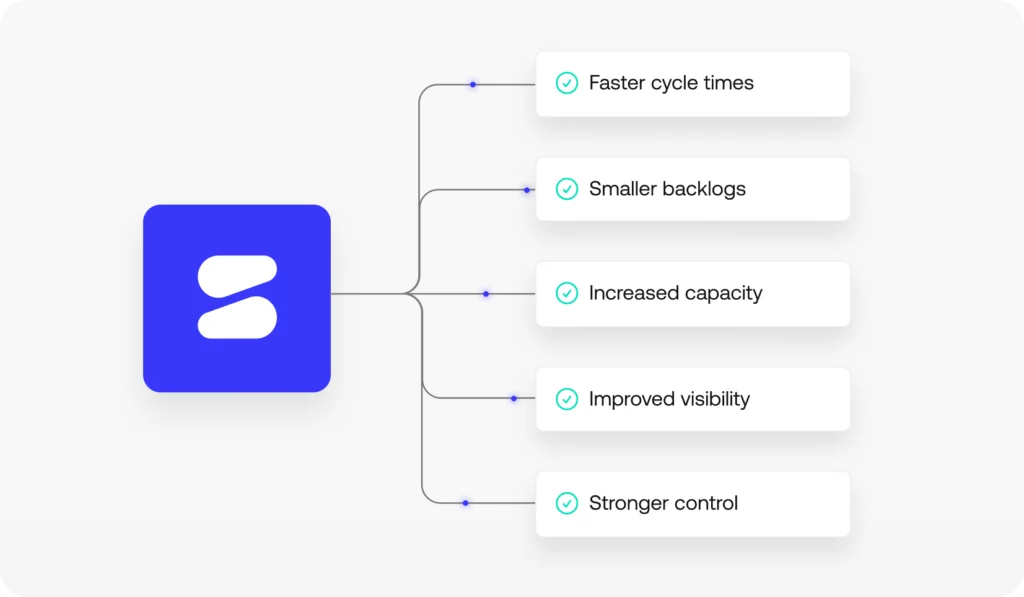
The ROI case should be measured through outcomes such as:
- Faster cycle times. Measure the time from source arrival to a documented reconciliation result, including time spent resolving material exceptions.
- Smaller backlogs. Track the count, value, age, and owner of unresolved items instead of relying on rows copied between files.
- Increased capacity. Measure how much analyst time moves from collecting and matching data to investigating exceptions and fixing recurring causes.
- Improved visibility. Give leaders a view of financial exposure by value, age, partner, and flow, with traceability for exceptions and adjustments.
- Stronger control. Review whether actions, rule changes, approvals, and evidence can be reconstructed without assembling a separate audit file.
A credible business case connects these measures to the cost of engineering changes, manual effort, delayed investigation, and fragmented reporting.
Simetrik brings data preparation, deterministic matching, exception management, and traceability into one controlled workflow. To evaluate the approach with your own high-volume reconciliation, request a demo.